

Royal Air Force
Sgt Hugh Owen RAF Log Book - Shot Down, POW Stalag Luft III - Lord Portal Copy
Sgt Hugh Owen RAF Log Book - Shot Down, POW Stalag Luft III - Lord Portal Copy
Couldn't load pickup availability
OWEN, Sgt Hugh W. Royal Air Force Observer’s and Air Gunner’s Flying Log Book.
Royal Air Force Form 1767, 1942.
Original Second World War RAF flying log book of Sgt Hugh W. Owen, Flight Engineer with 76 Squadron, recording Halifax training, combat operations, the Genoa raid on which he was shot down, capture in occupied France, and later POW imprisonment at Stalag Luft III. From the collection of Air Chief Marshal Lord Portal.
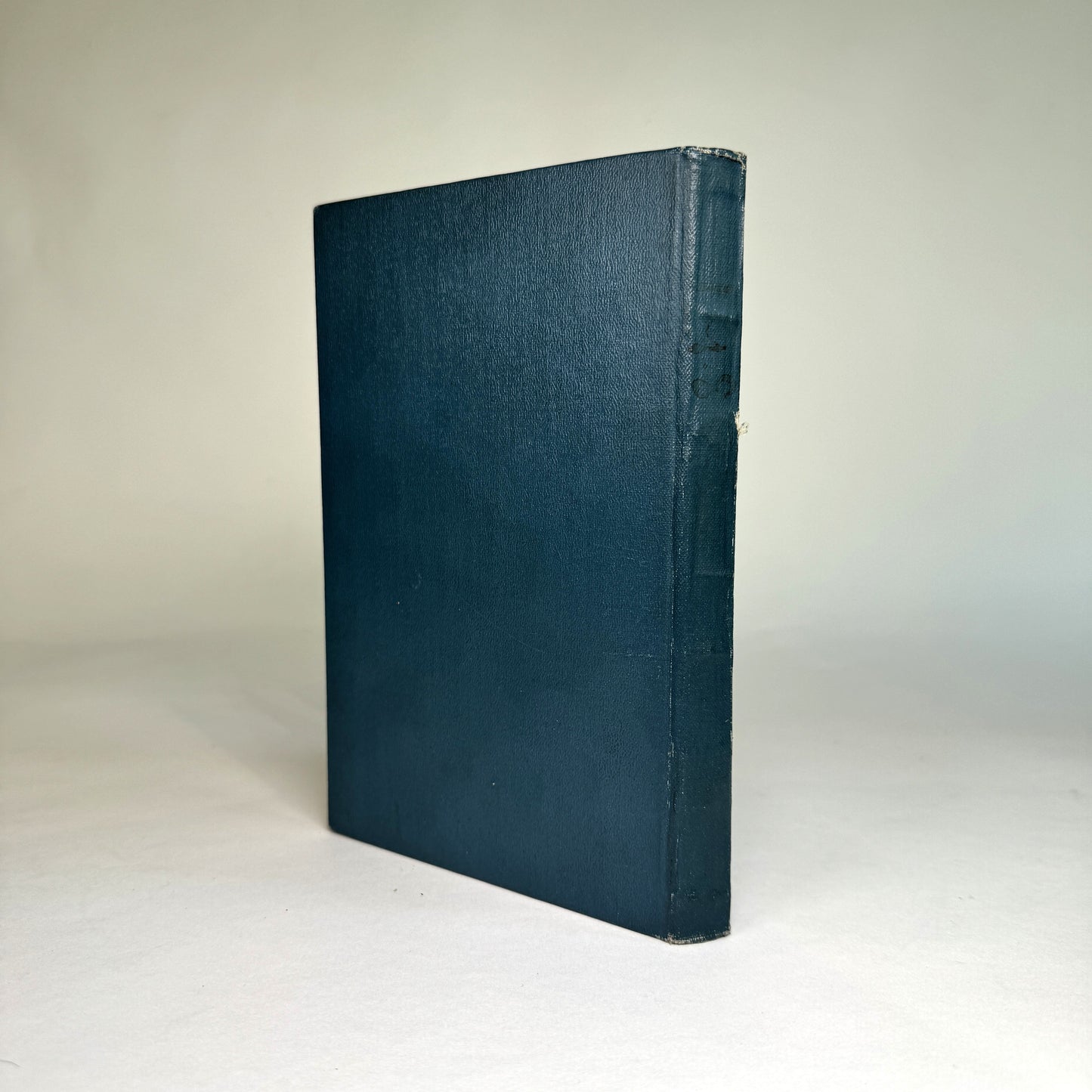
Original RAF blue cloth log book, upper cover titled “Royal Air Force Observer’s and Air Gunner’s Flying Log Book”, with “Owen H.” to the cover and “Red Owen” boldly written along the fore-edge. Certificate page completed for 572232 Sgt Owen H., qualified as Flight Engineer, Lancaster I from 27 June 1942 at No. 4 School of Technical Training, St Athan, and then as Flight Engineer, Halifax I and II from 11 July 1942 with 76 Squadron, Middleton St George.
An exceptionally important Bomber Command flying log book, moving from training to front-line operations and ending with one of the most dramatic possible entries: “Operation Genoa - Missing.” The early pages record Halifax conversion and operational preparation, including local flights, cross-country work, air-to-sea firing, gunnery, fighter co-operation, three-engine flying, night flying and searchlight co-operation. Several entries have striking immediacy, including “Climb to 12,500 - Evasive action,” “Brakes u/s,” and, in red ink, a searchlight co-operation flight noting the port engine feathered, oil leak and “two con-rods thro crankcase.” The use of blue and black ink for routine flying, set against the red operational and incident entries, gives the log a powerful visual distinction: the danger gradually moves from training exercise to combat reality.
The operational section is especially strong. On 23 October 1942 Owen records his first operation to Genoa: “1st Op. Genoa. 1 x 1000, 6 cans, 2 bundles,” with 9 hours 30 minutes of night operational flying. The later entry for 7 November 1942 is starkly entered in red: “Operation Genoa - Missing.”
This refers to Halifax Mk II DT515 of No. 76 Squadron, part of a force of 175 RAF bombers sent against Genoa on 7 November 1942. The International Bomber Command Centre archive identifies the crew as: George Thom, Flying Sergeant, RCAF, pilot; D. J. McBride, Sergeant, RNZAF, wireless operator; Norman H. Gorfunkle, Sergeant, RAF, navigator; Larry W. Horne, Sergeant, RAF, mid-upper gunner; Hugh W. Owen, Sergeant, RAF, engineer; Derek L. Reed, Sergeant, RAF, rear gunner; and J. R. White, Sergeant, RCAF, bomb aimer.
The IBCC account, based on pilot George Thom’s narrative and a gendarmerie report, gives a vivid account of the loss. DT515 crossed the French coast between Dunkirk and Ostend, avoiding searchlights, but was damaged by flak. Near Reims, engine trouble became severe; the aircraft could not cross the Alps on three engines with a full bomb load, the bombs were jettisoned safe, and when further engine trouble developed Thom ordered the crew to bale out. The Halifax crashed and exploded near Sexfontaines / Juzennecourt, Haute-Marne.
The aftermath makes this log book still more important. Five of the seven crew were captured. Norman Gorfunkle was badly injured and later died in hospital at Chaumont. A gendarmerie report records that Hugh Owen was arrested at daybreak on 9 November, described as badly shocked, after parachuting from the aircraft. Pilot George Thom made an attempted escape route towards Switzerland, was later captured by the Gestapo near Perpignan, and was sent to a POW camp in Germany. Larry Horne, the mid-upper gunner, successfully evaded capture and returned to Britain via the Resistance and Switzerland. Reed, Owen, White and McBride were released in May 1945.
Owen was later held at Stalag Luft III, the Luftwaffe prisoner-of-war camp later famous as the site of the Great Escape. No evidence has been found that Owen himself was one of the Great Escape participants, and none of the DT515 crew names appear in the standard list of the 76 Allied airmen who escaped through tunnel “Harry” in March 1944. The Stalag Luft III association should therefore be stated carefully, but it remains a highly significant POW connection.
Provenance: from the collection of Air Chief Marshal Lord Portal, Chief of the Air Staff during the Second World War and the central RAF figure of Britain’s strategic air war. The association is exceptionally resonant: a front-line Halifax flight engineer’s operational log, recording training, combat, loss, capture and captivity, preserved in the collection of the man who directed the RAF at the highest level.
Condition: very good for an operational wartime log book. The blue boards show expected service wear, light rubbing and handling, with toning to the leaves, but the binding remains sound and the manuscript entries are clear, legible and compelling throughout.
Crew of Halifax Mk II DT515 - 76 Squadron - Genoa raid, 7 November 1942:
George Thom - Flying Sergeant, RCAF - pilot - captured after attempted escape
D. J. McBride - Sergeant, RNZAF - wireless operator - captured, released May 1945
Norman H. Gorfunkle - Sergeant, RAF - navigator - captured, badly injured, died in hospital
Larry W. Horne - Sergeant, RAF - mid-upper gunner - evaded capture, returned to Britain
Hugh W. Owen - Sergeant, RAF - flight engineer - captured, POW, later Stalag Luft III
Derek L. Reed - Sergeant, RAF - rear gunner - captured, released May 1945
J. R. White - Sergeant, RCAF - bomb aimer - captured, released May 1945
Share