

James Bruce of Kinnaird
James Bruce - The Source of the Nile, 1790 - A Monumental First Edition in Contemporary Tree Calf
James Bruce - The Source of the Nile, 1790 - A Monumental First Edition in Contemporary Tree Calf
Couldn't load pickup availability
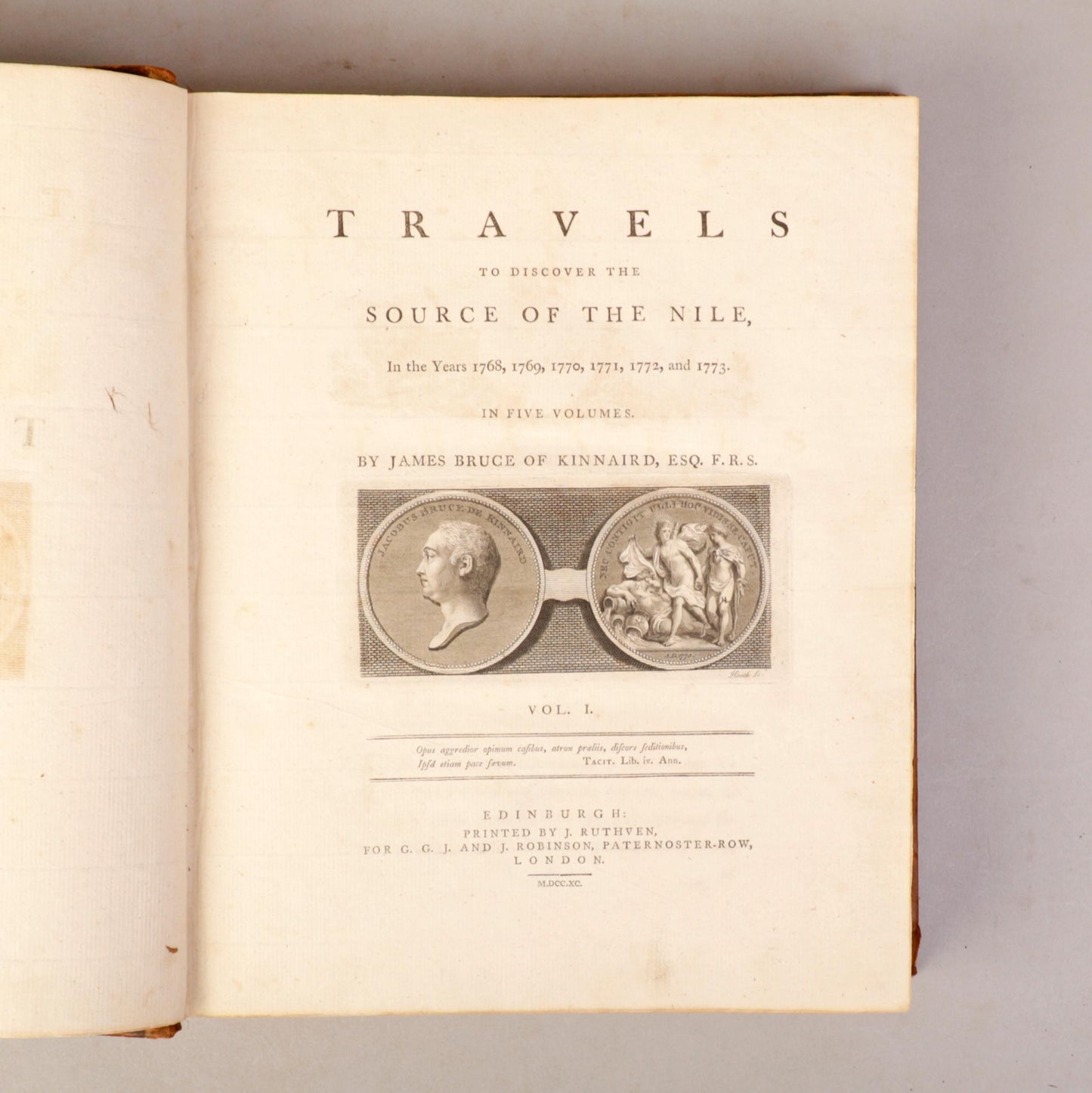
BRUCE, JAMES. Travels to Discover the Source of the Nile. First Edition, 1790. Complete in Five Uncut Volumes, Contemporary Tree Calf.
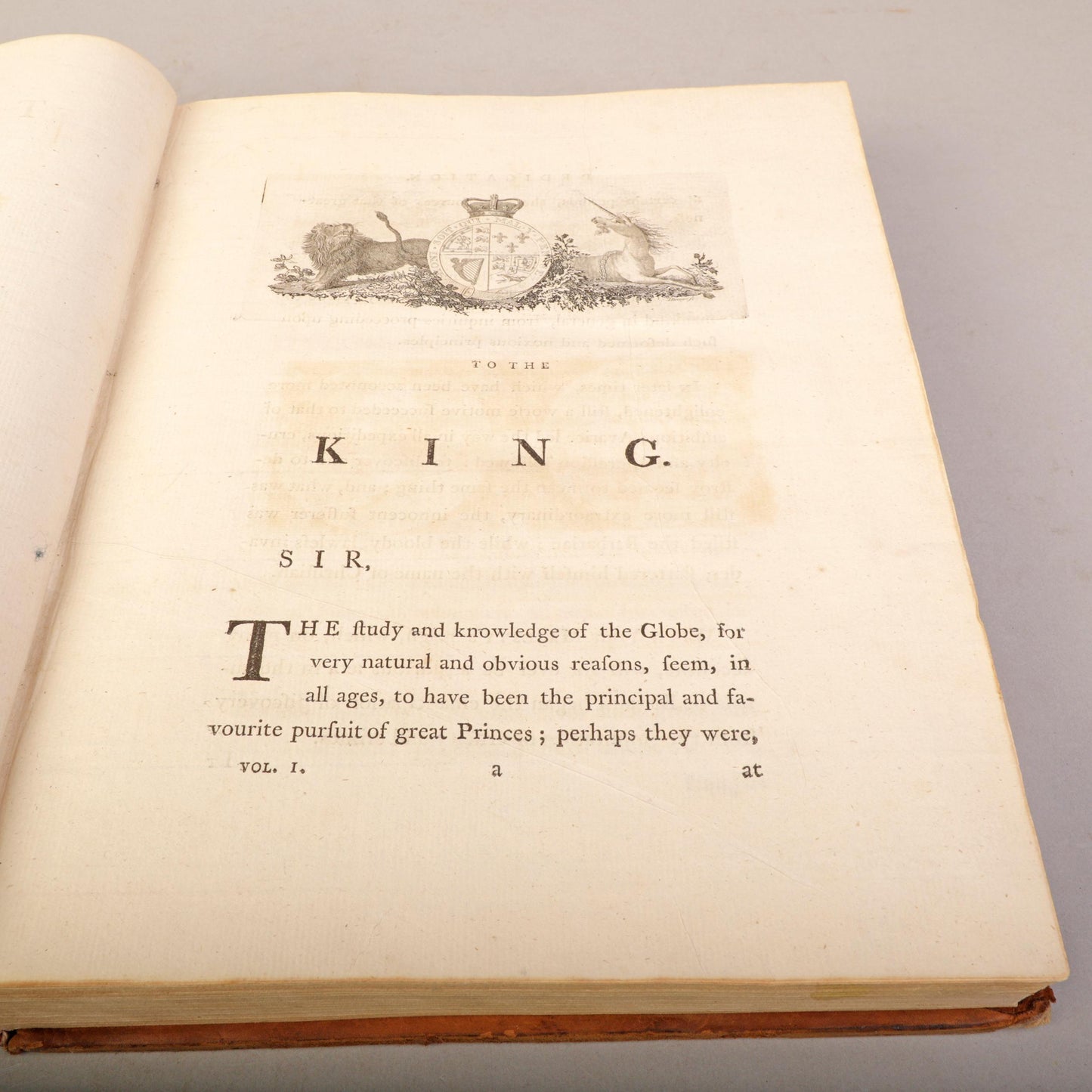
BRUCE, James, of Kinnaird. Travels to Discover the Source of the Nile, in the Years 1768, 1769, 1770, 1771, 1772, and 1773. In Five Volumes. Edinburgh: Printed by J. Ruthven, for G. G. J. and J. Robinson, Paternoster-Row, London, 1790.
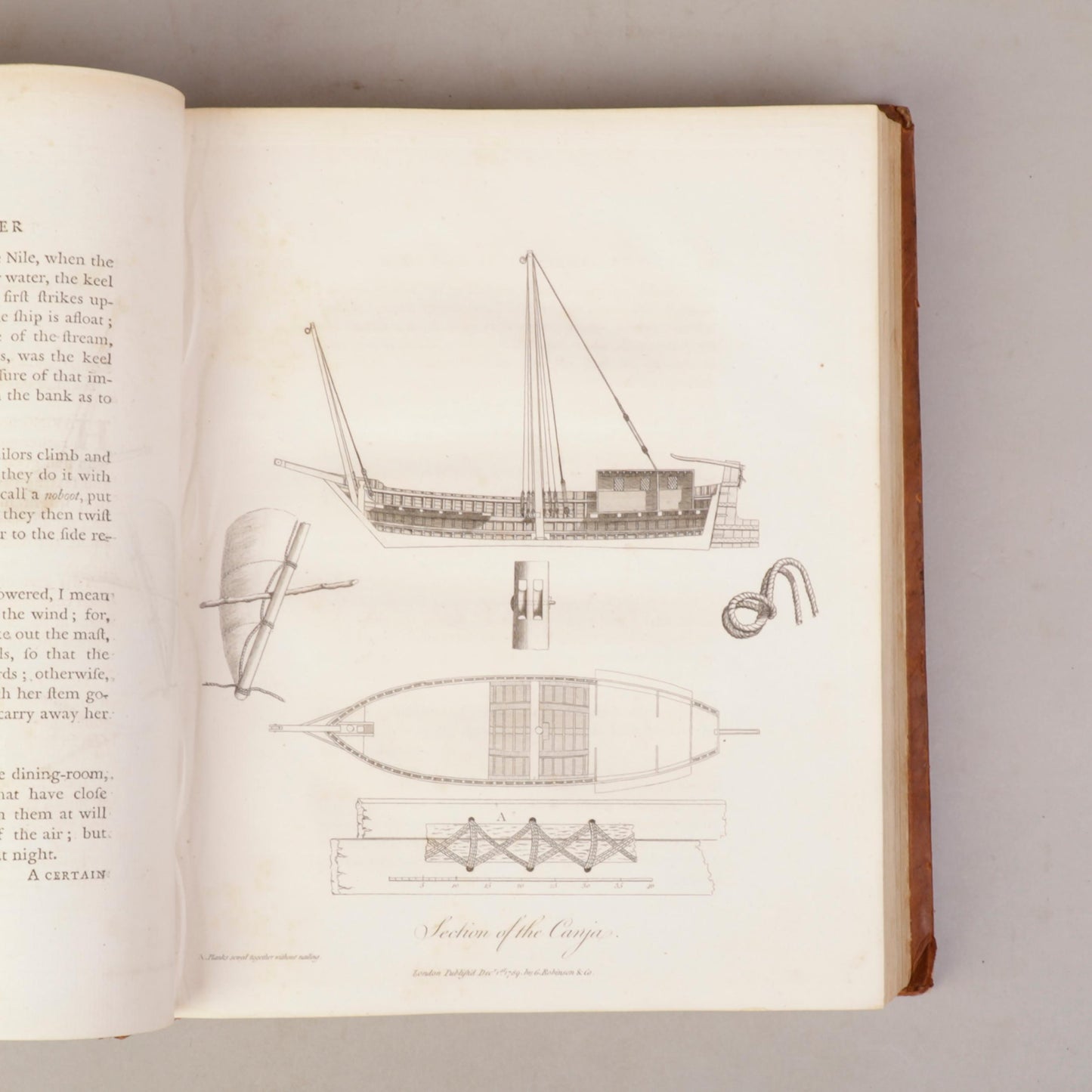
First edition. Complete in five volumes, with all three folding maps and 55 further engraved plates present, 58 engraved illustrations in total. ESTC T51608; Blackmer 221; Nissen ZBI 617; Gay 44; Hilmy I, p. 91; Cox I, p. 388.
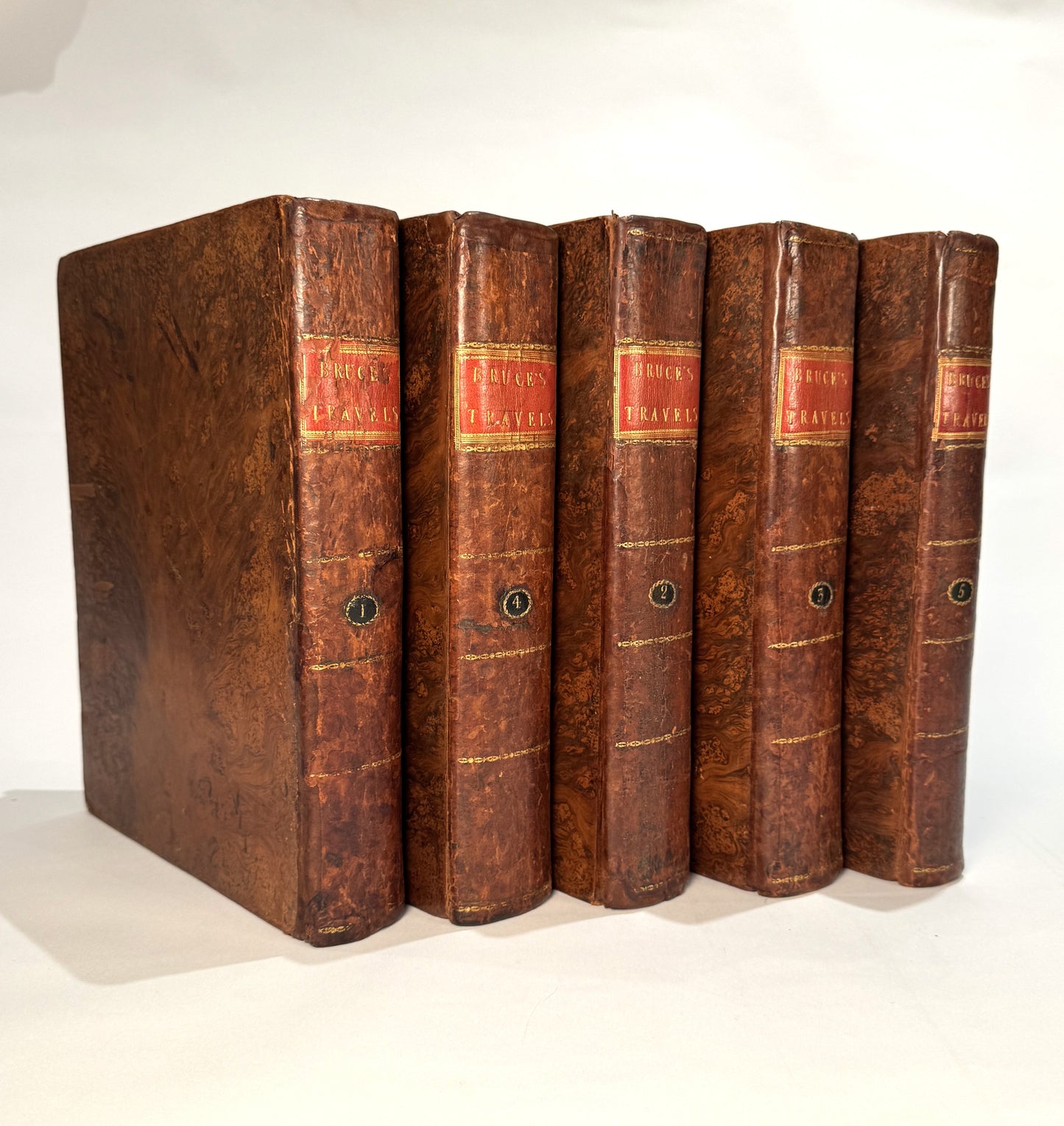
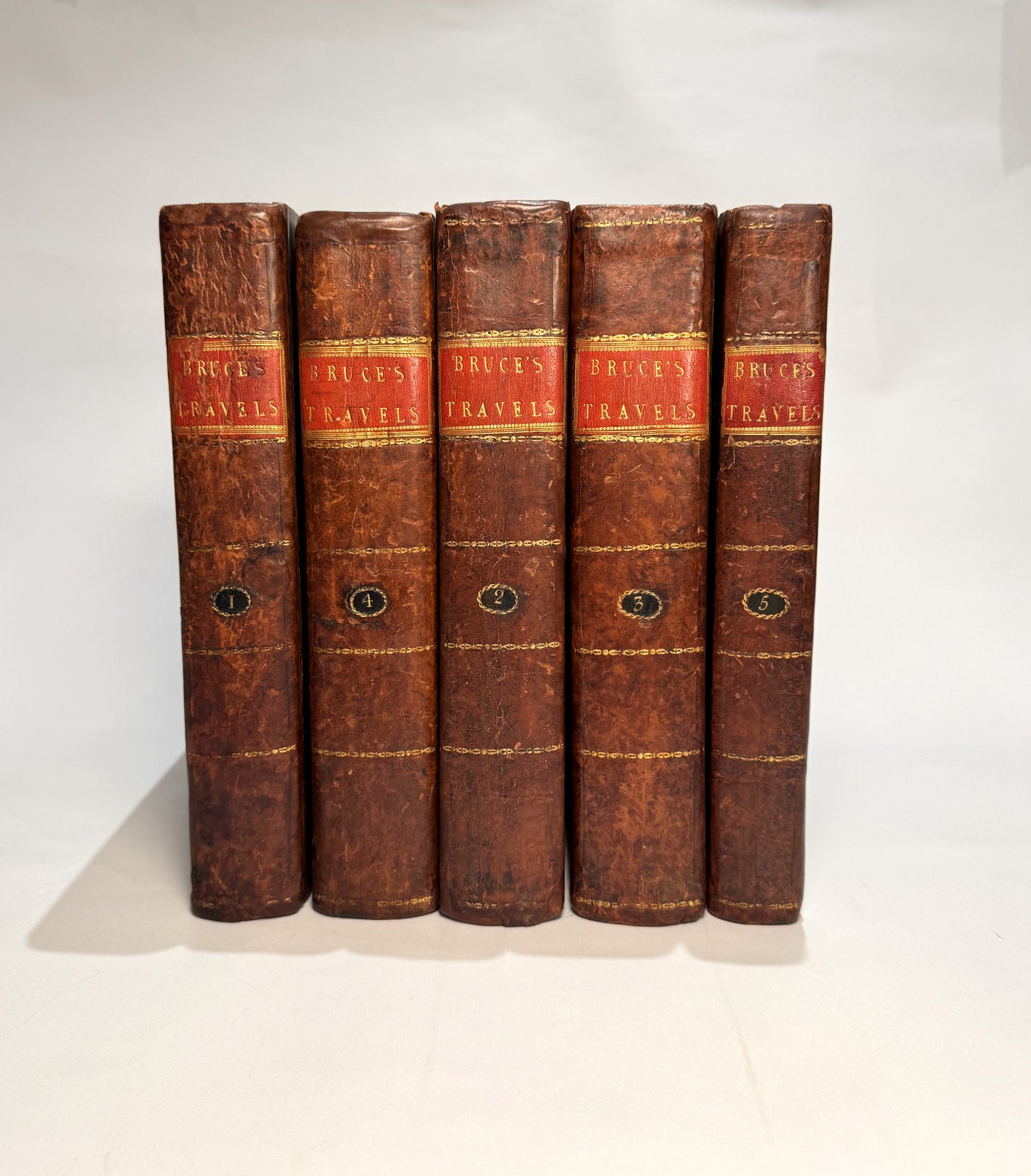
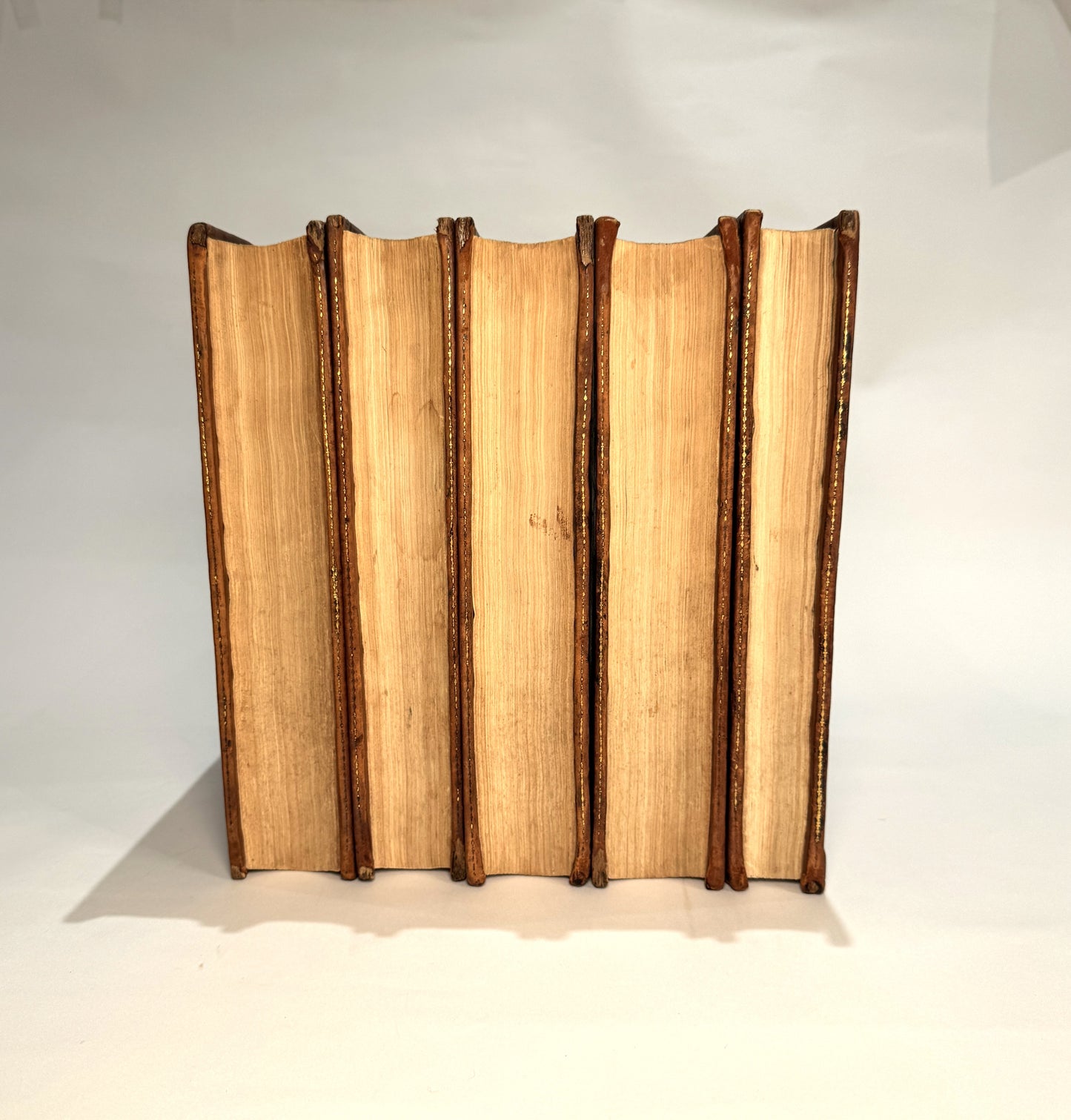
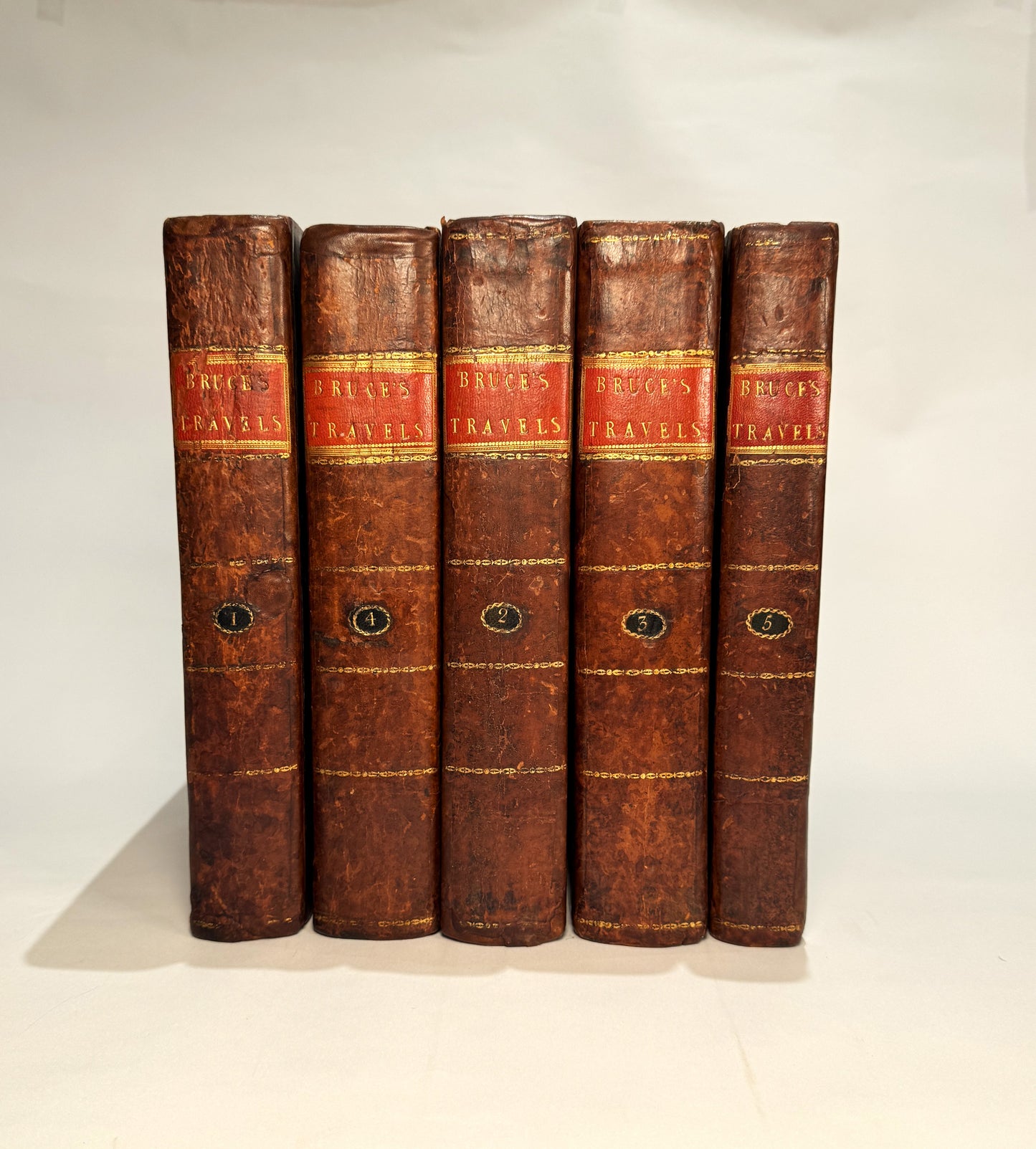
Five quarto volumes. A remarkably appealing uncut set in uniform contemporary full tree calf, the boards with rich mottled figuring and gilt-ruled borders; spines ruled and ornamented in gilt, with red morocco title labels lettered “Bruce's Travels” and circular black morocco volume labels numbered in gilt. The volumes retain broad untrimmed margins, giving the set unusual presence and preserving an important feature seldom encountered in such an extensive eighteenth-century illustrated travel work.
James Bruce of Kinnaird's Travels to Discover the Source of the Nile is one of the great narratives of African exploration. Setting out from Alexandria in 1768, Bruce travelled through Egypt, the Red Sea and Arabia before entering Abyssinia, now Ethiopia. In November 1770 he reached the springs at Geesh, which he identified as the source of the Nile known to classical geography, now recognised as the source of the Blue Nile. His journey produced one of the most substantial eighteenth-century European accounts of Ethiopia, its court, religious traditions, languages, landscapes, natural history and political life.
Bruce's account extended far beyond the question of the Nile's source. Across the first four volumes he describes Egypt, Nubia, the Red Sea, Arabia, Abyssinia and the arduous course of his travels, combining narrative adventure with geography, history, antiquities and first-hand observation. His descriptions of Ethiopia were initially received with scepticism by some contemporaries, yet the significance of his journey and the value of much of his record became firmly established.
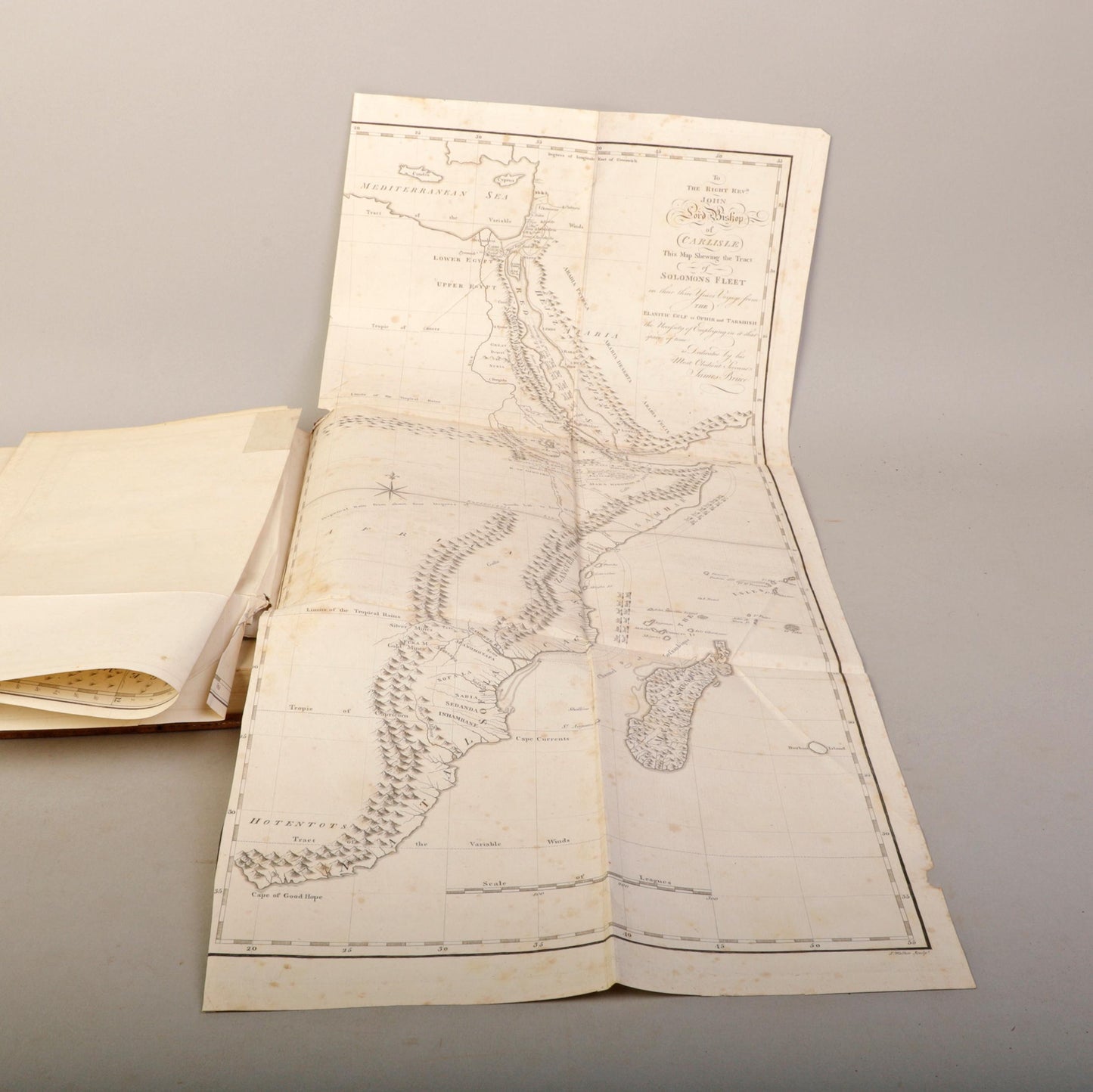
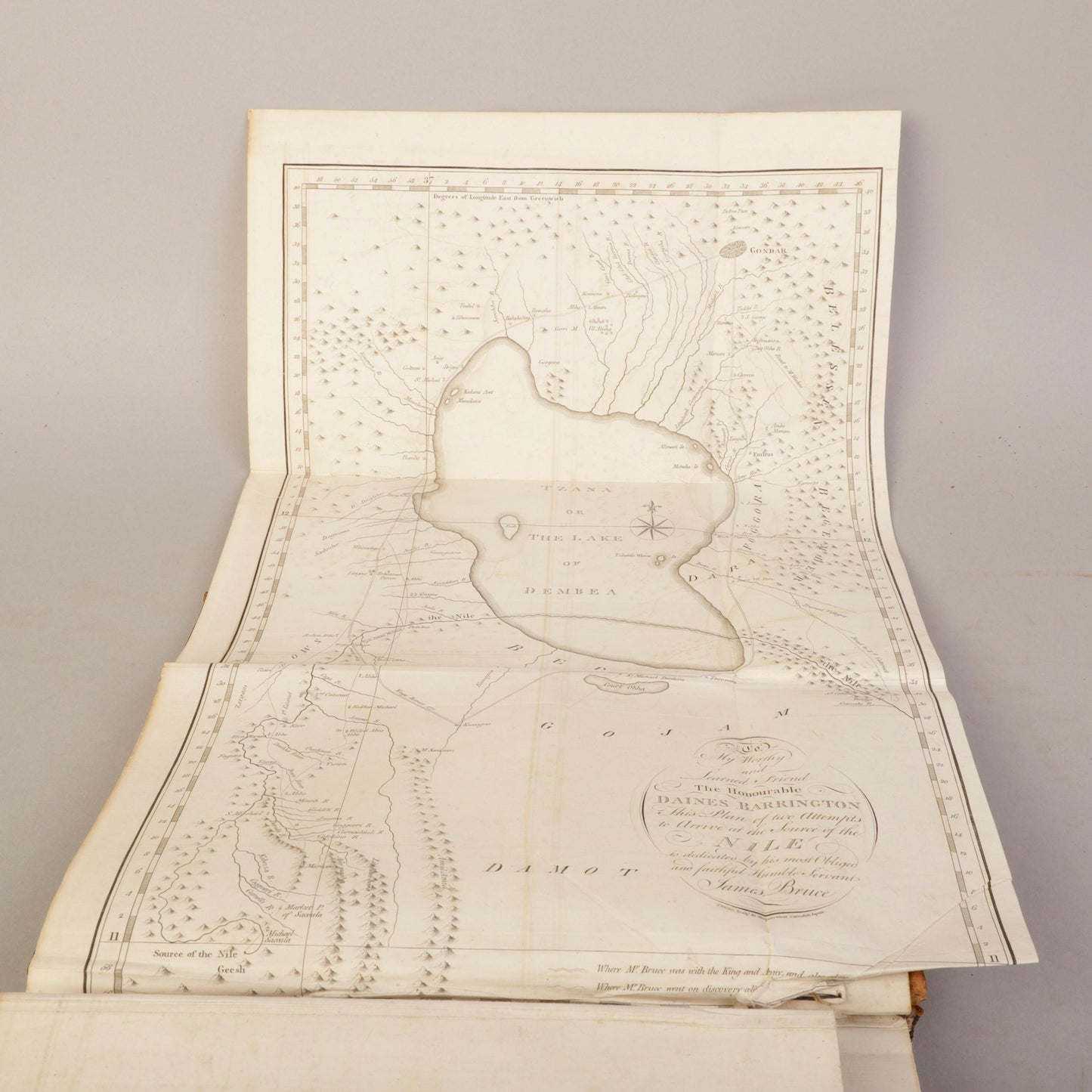
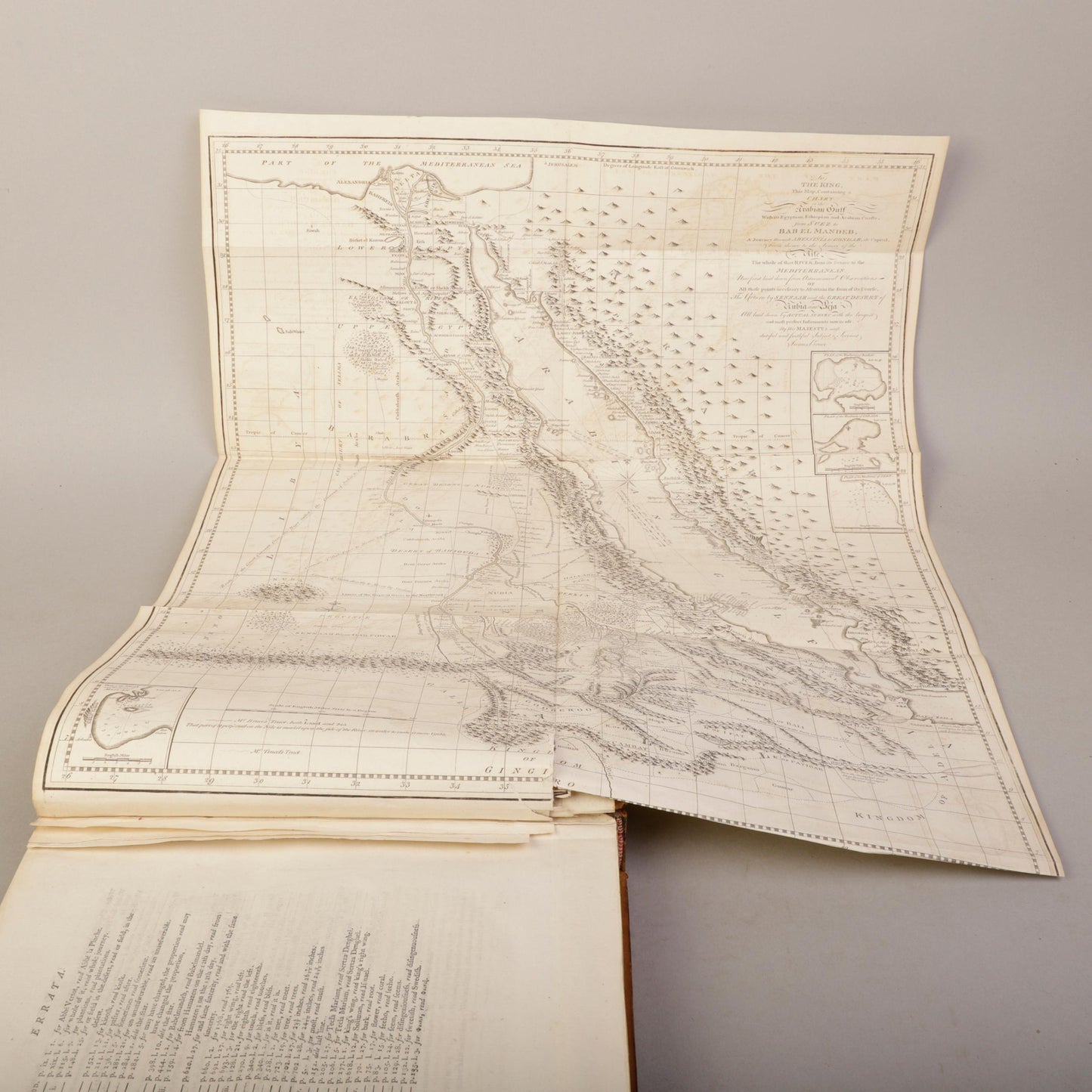
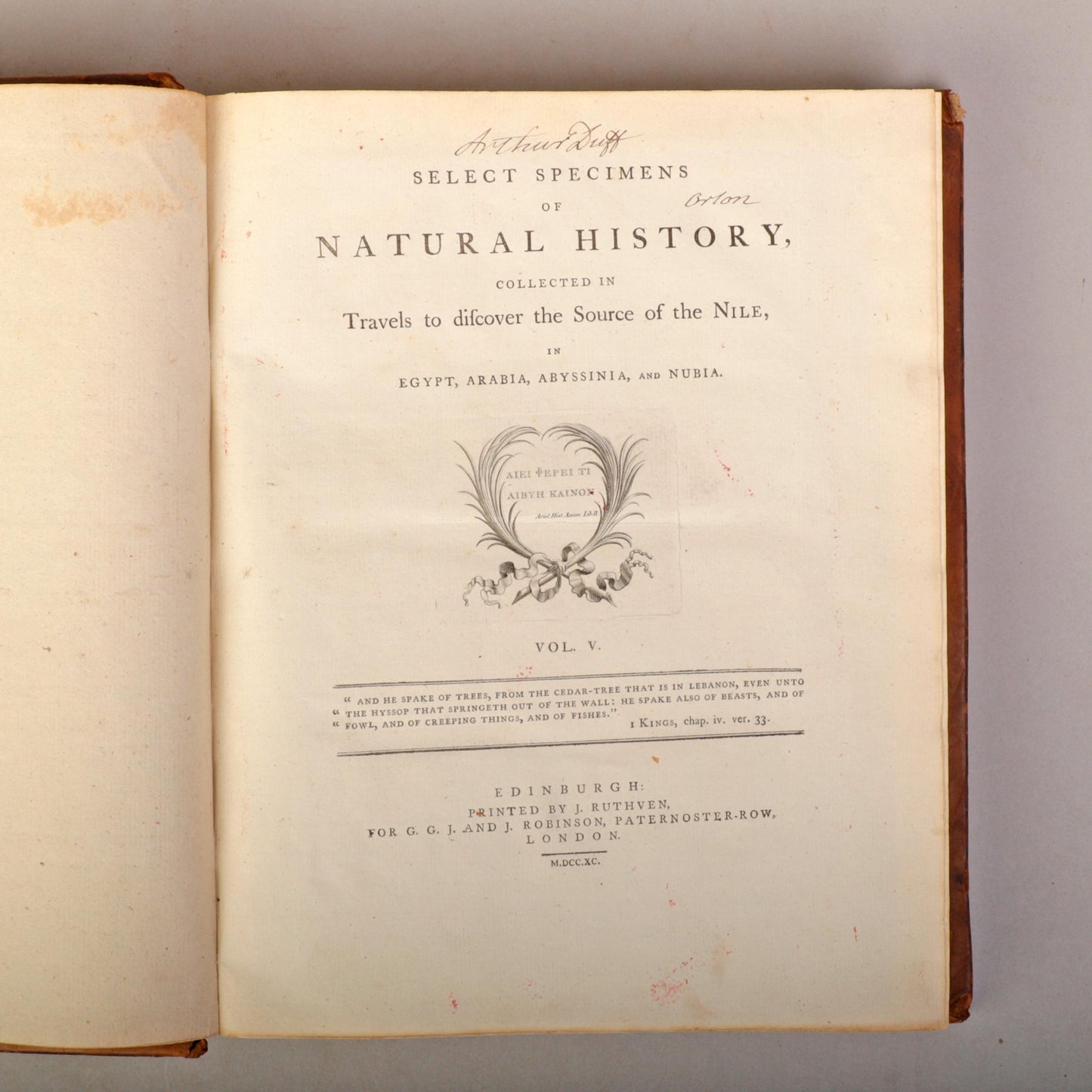
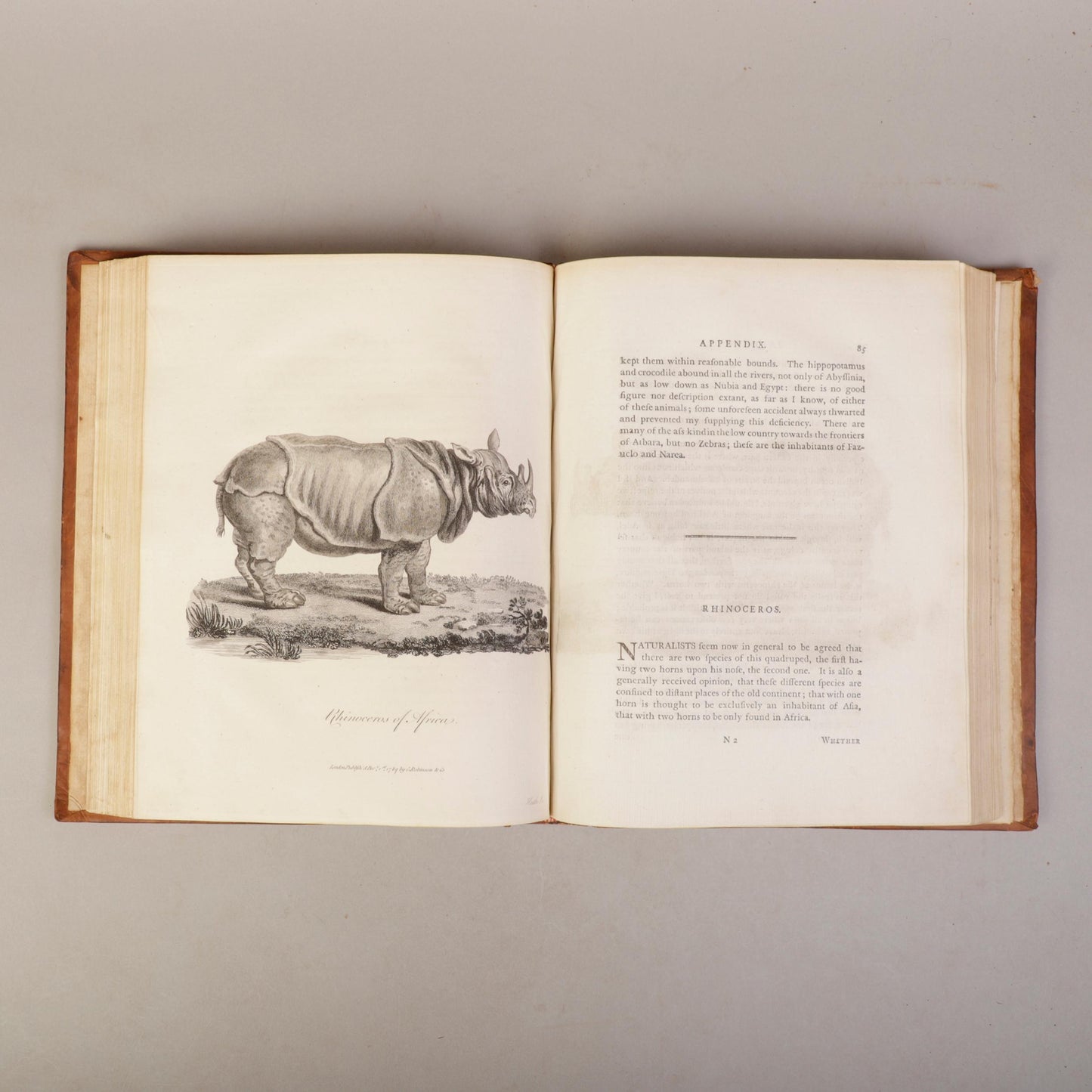
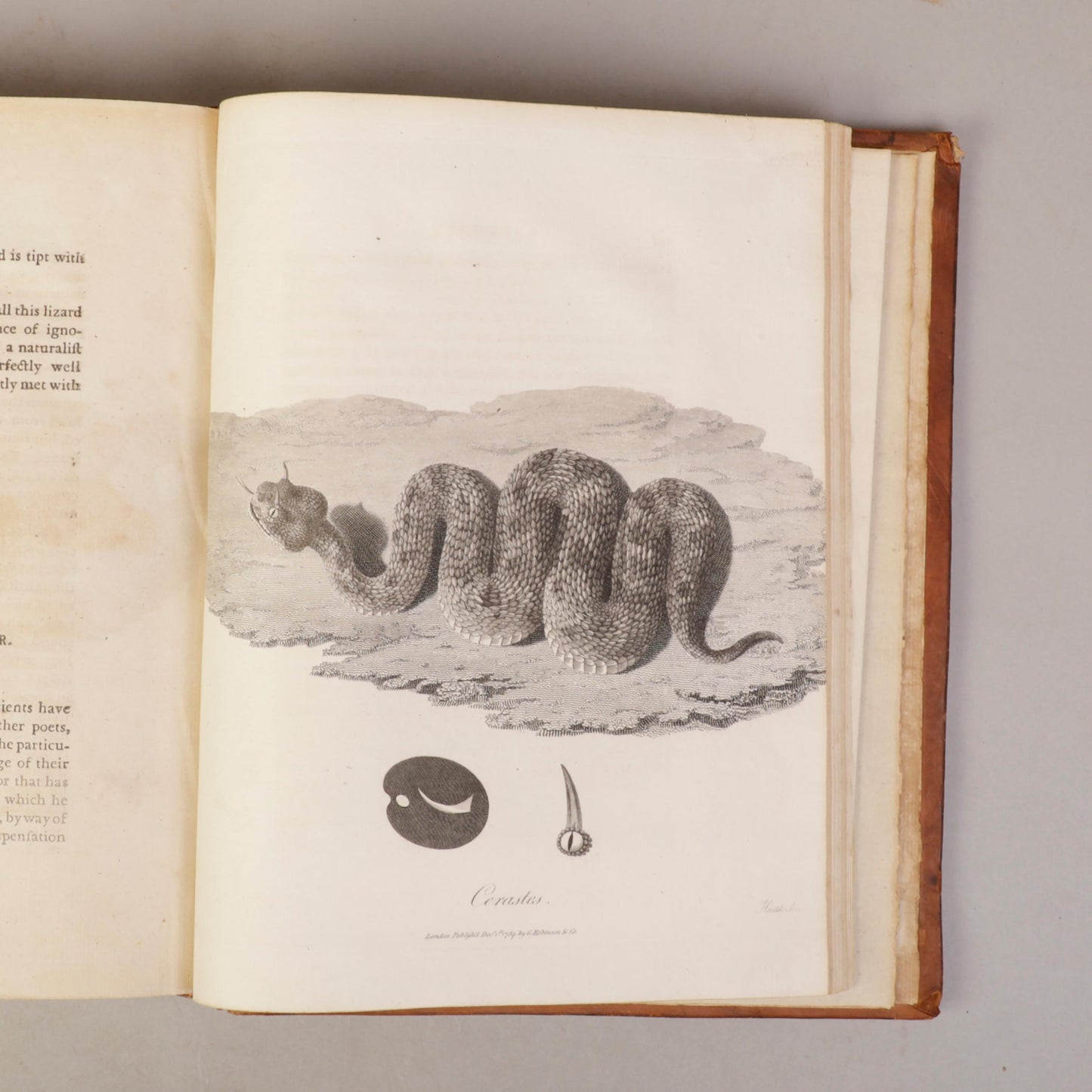
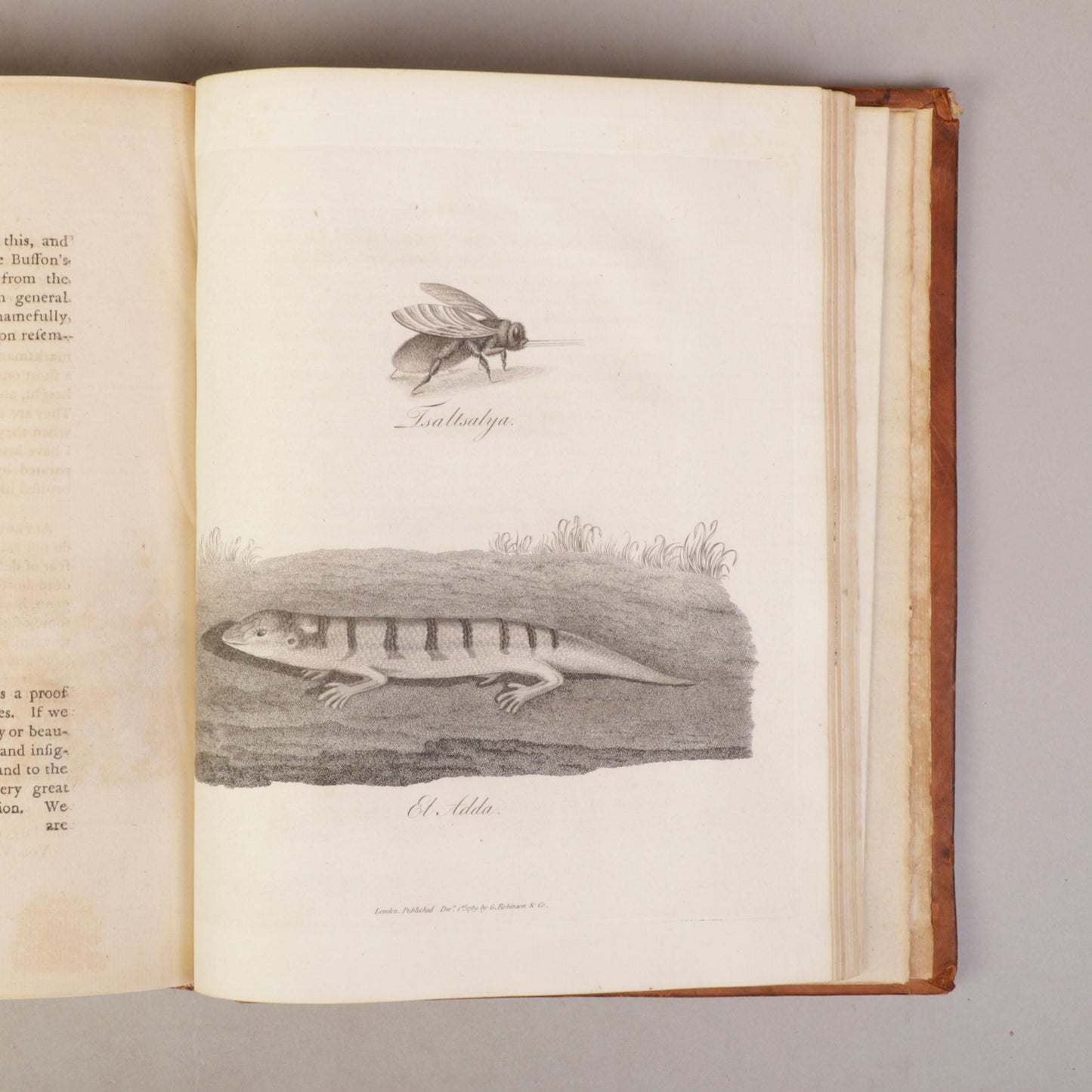
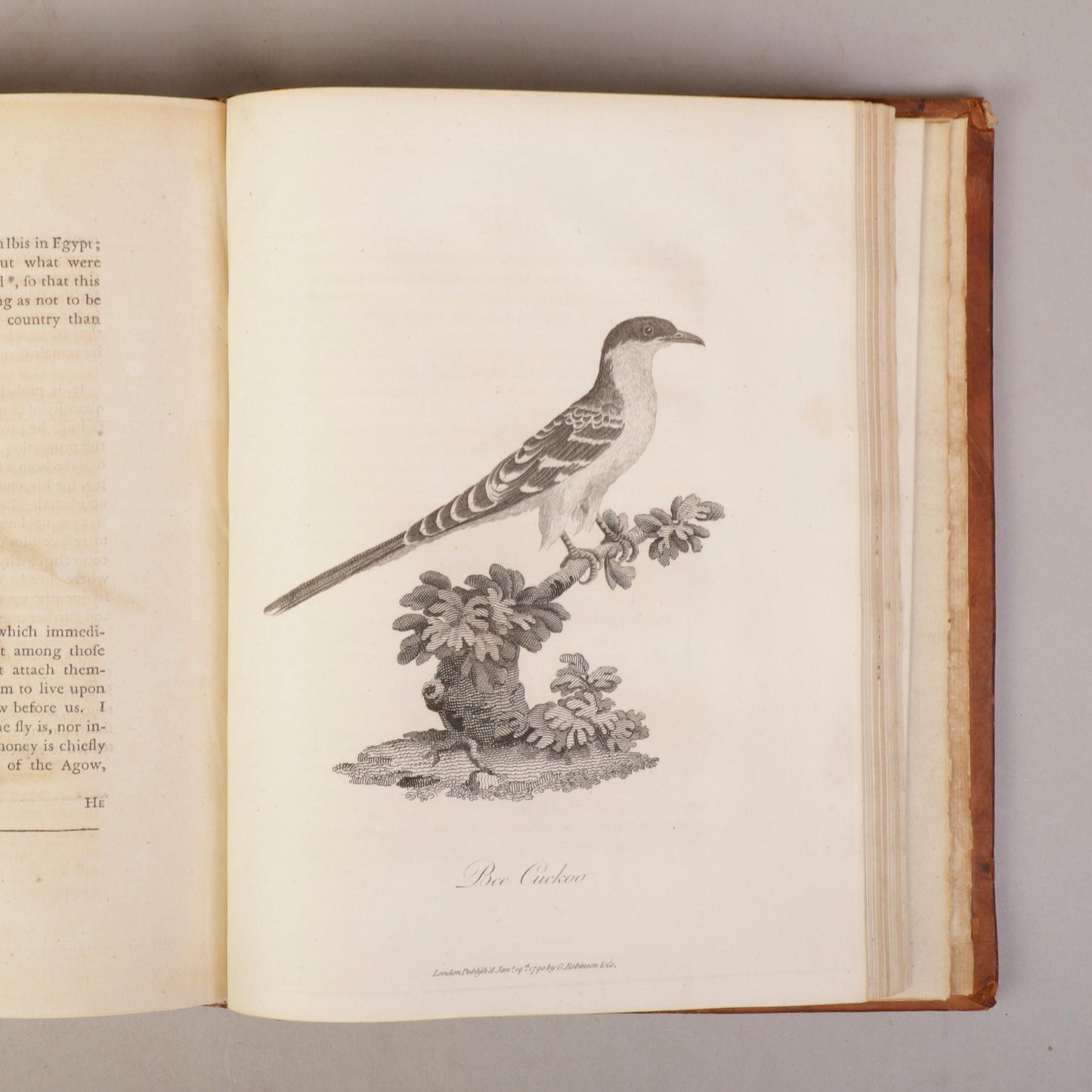
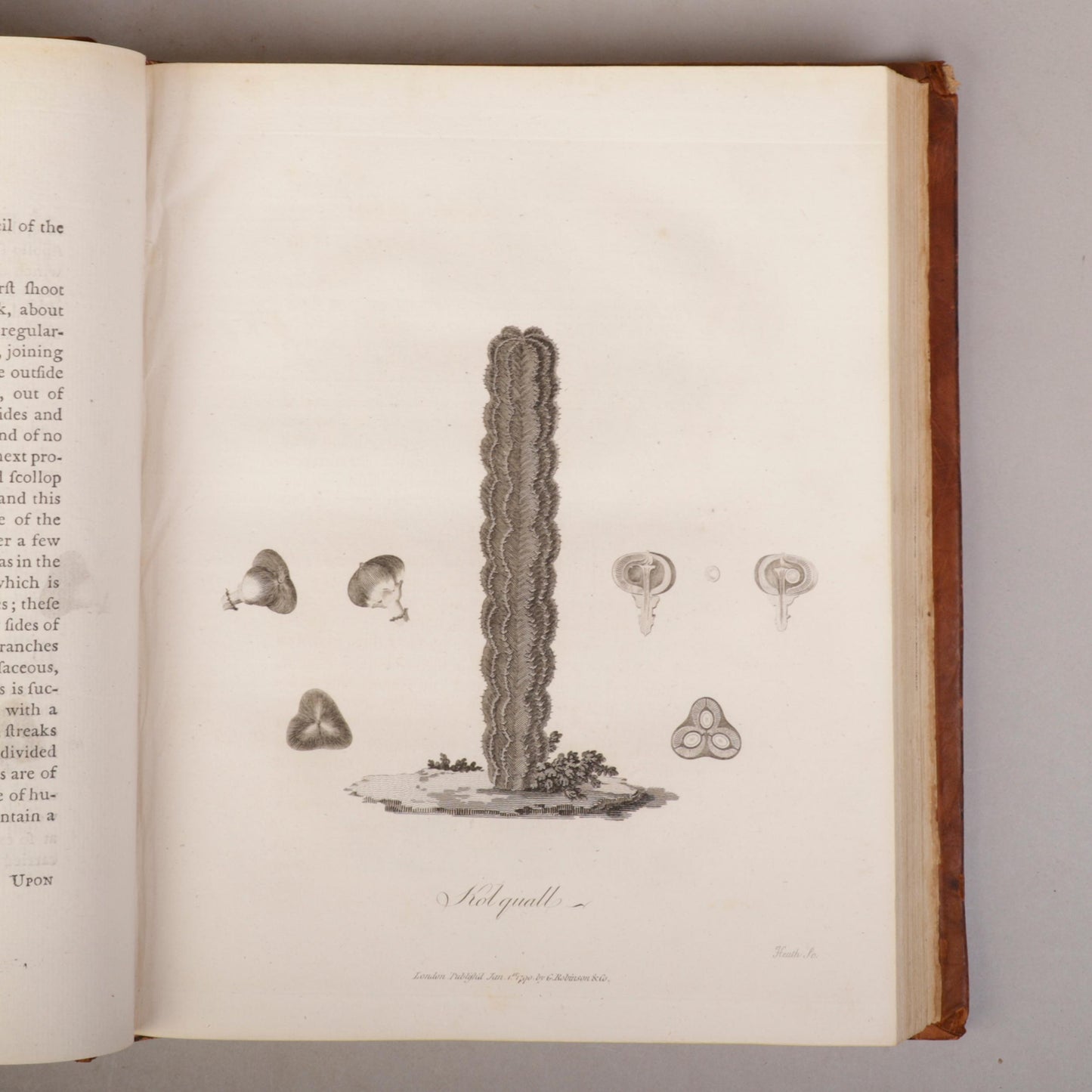
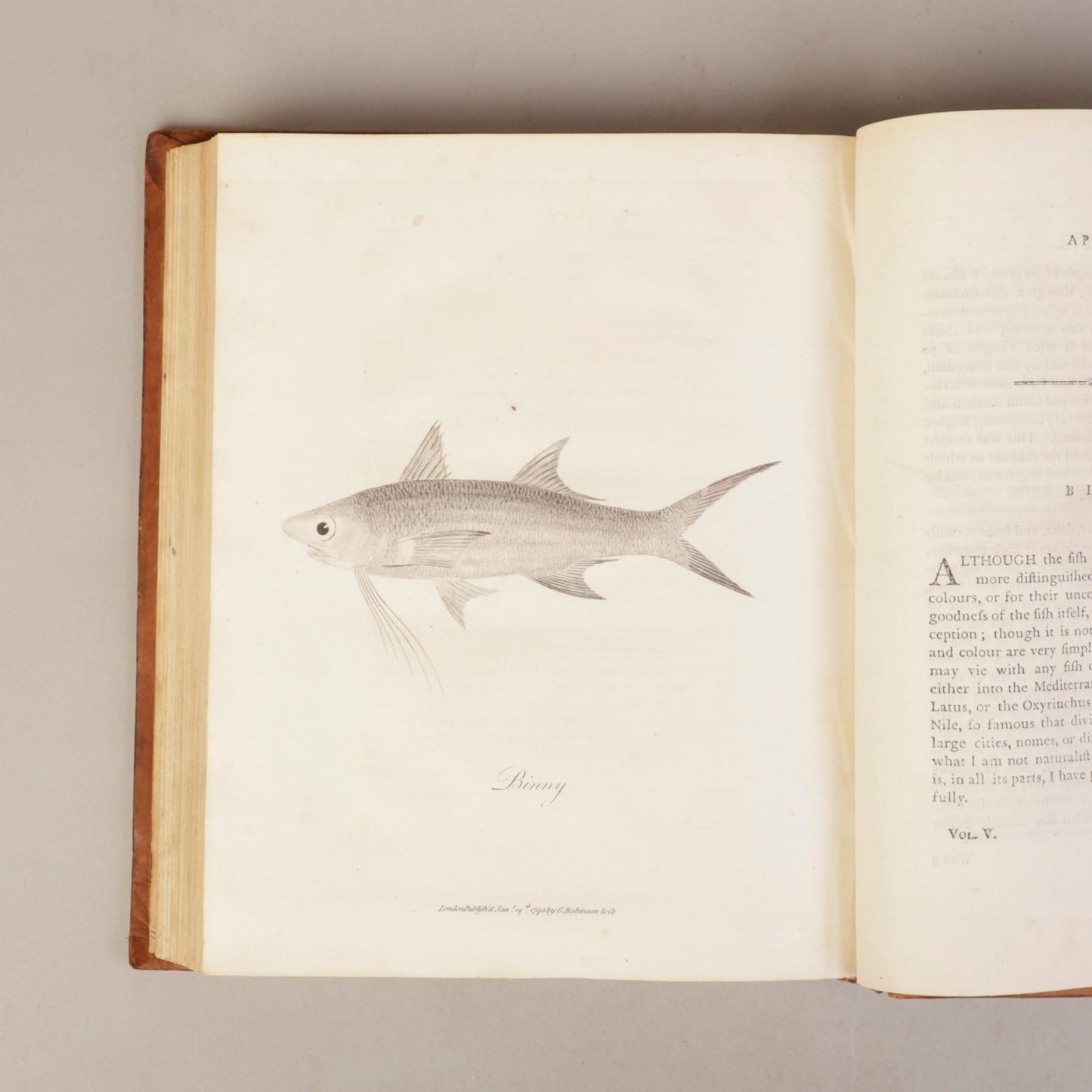
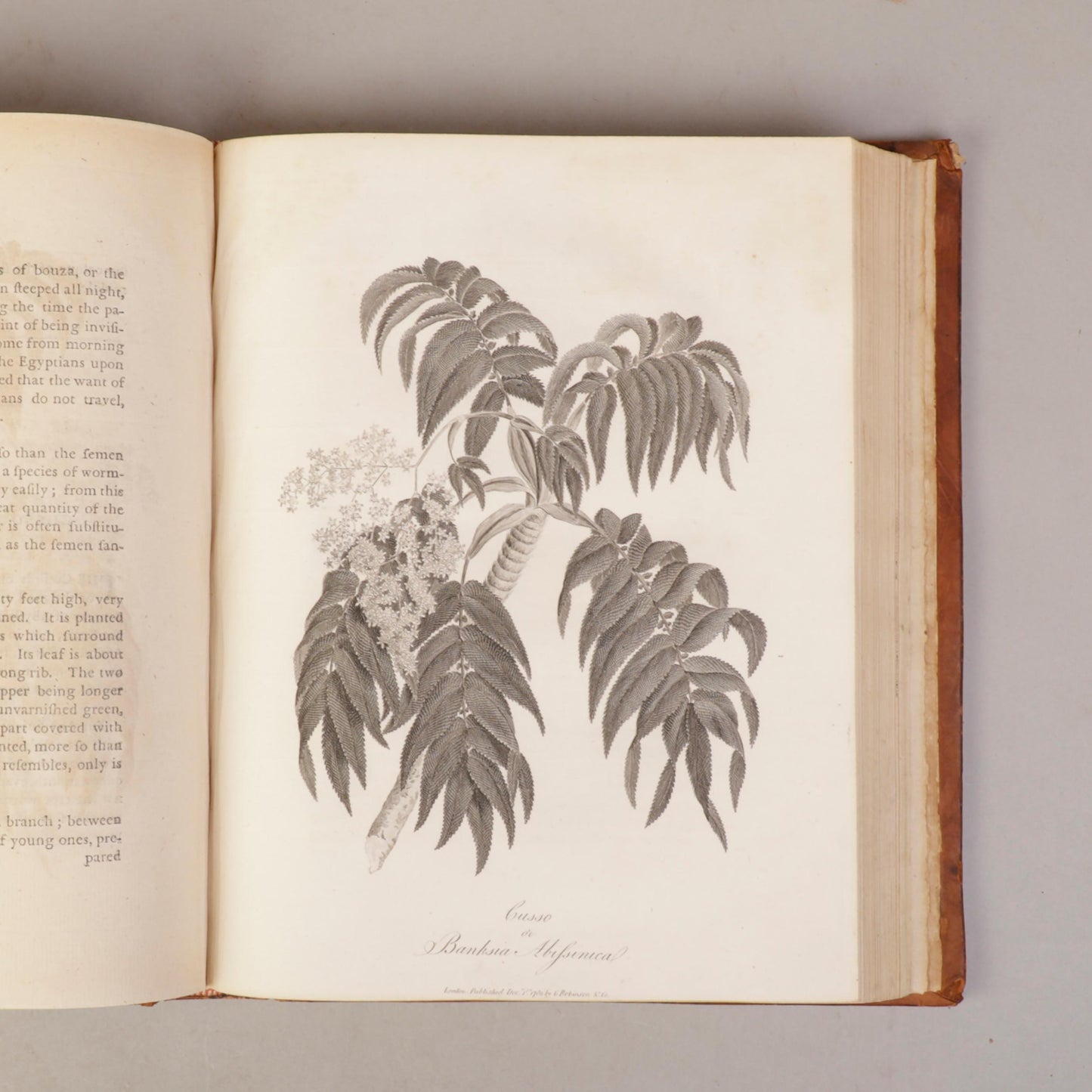
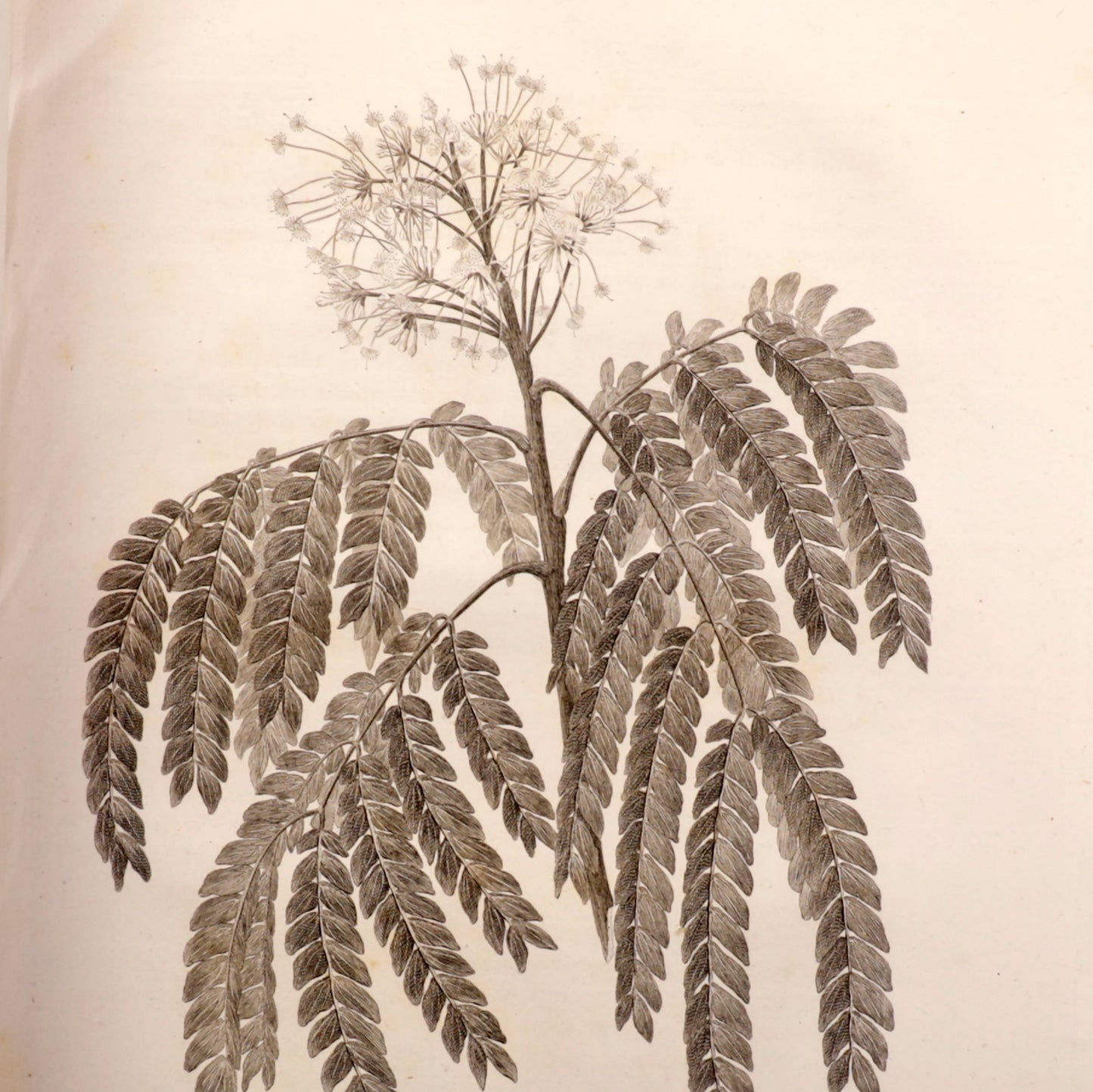
The fifth volume is especially important. Published under the separate title Select Specimens of Natural History, Collected in Travels to Discover the Source of the Nile, in Egypt, Arabia, Abyssinia, and Nubia, it gathers the natural history and illustrative material arising from the expedition. The plates were based upon drawings by Bruce and his travelling companion, the Italian artist Luigi Balugani, and engraved principally by James Heath. Together with zoological and botanical subjects, the complete suite includes the large folding maps tracing the regions and routes central to Bruce's journey, including the Nile, Abyssinia and the Red Sea world.
This copy is complete with all maps and engraved plates required for the first edition: three folding maps and 55 further engraved plates, 58 engraved illustrations in total. The large folding maps shown here are among the most compelling visual elements of the work, while the separate natural history volume gives the set considerable importance for collectors of illustrated travel, Africana and the history of science.
The survival of the set in an uncut state is particularly desirable. The broad margins emphasise the scale and ambition of Bruce's publication, while the contemporary tree-calf bindings retain the character of an imposing late eighteenth-century library set. Their richly figured boards and original-style contrasting spine labels create strong shelf presence.
The bindings show rubbing, abrasion and wear to joints, spine ends and corners, with some age-related loss and cracking commensurate with a substantial working set of this period. Internally, the text is generally clean with occasional spotting, light offsetting and handling marks. The folding maps show expected fold lines and occasional age-related marking. A manuscript ownership inscription is present on the title page of Volume V.
A highly desirable complete first edition of Bruce's monumental search for the source of the Nile: five uncut volumes in contemporary tree calf, complete with its folding maps and engraved plates, and a cornerstone work for collections of African exploration, Ethiopia, cartography and eighteenth-century travel.
Share