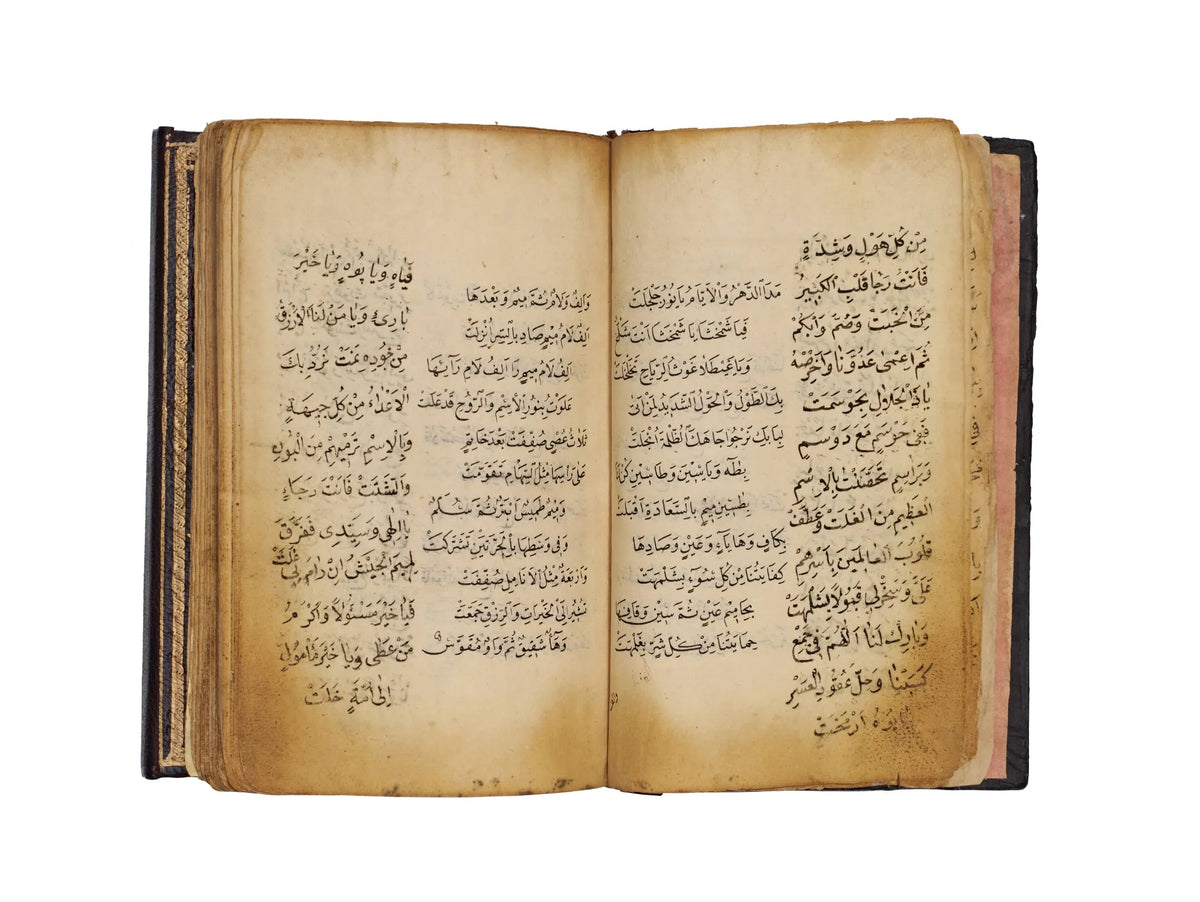
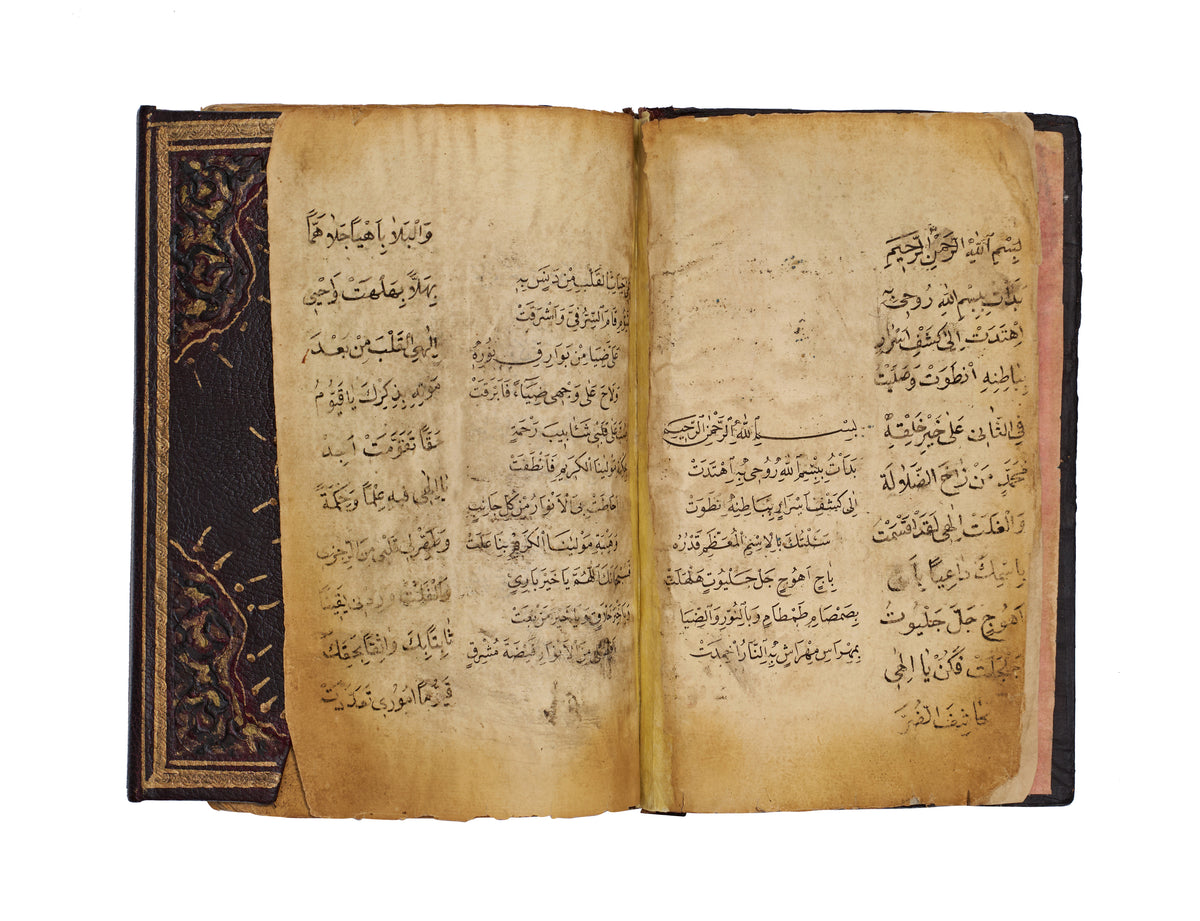
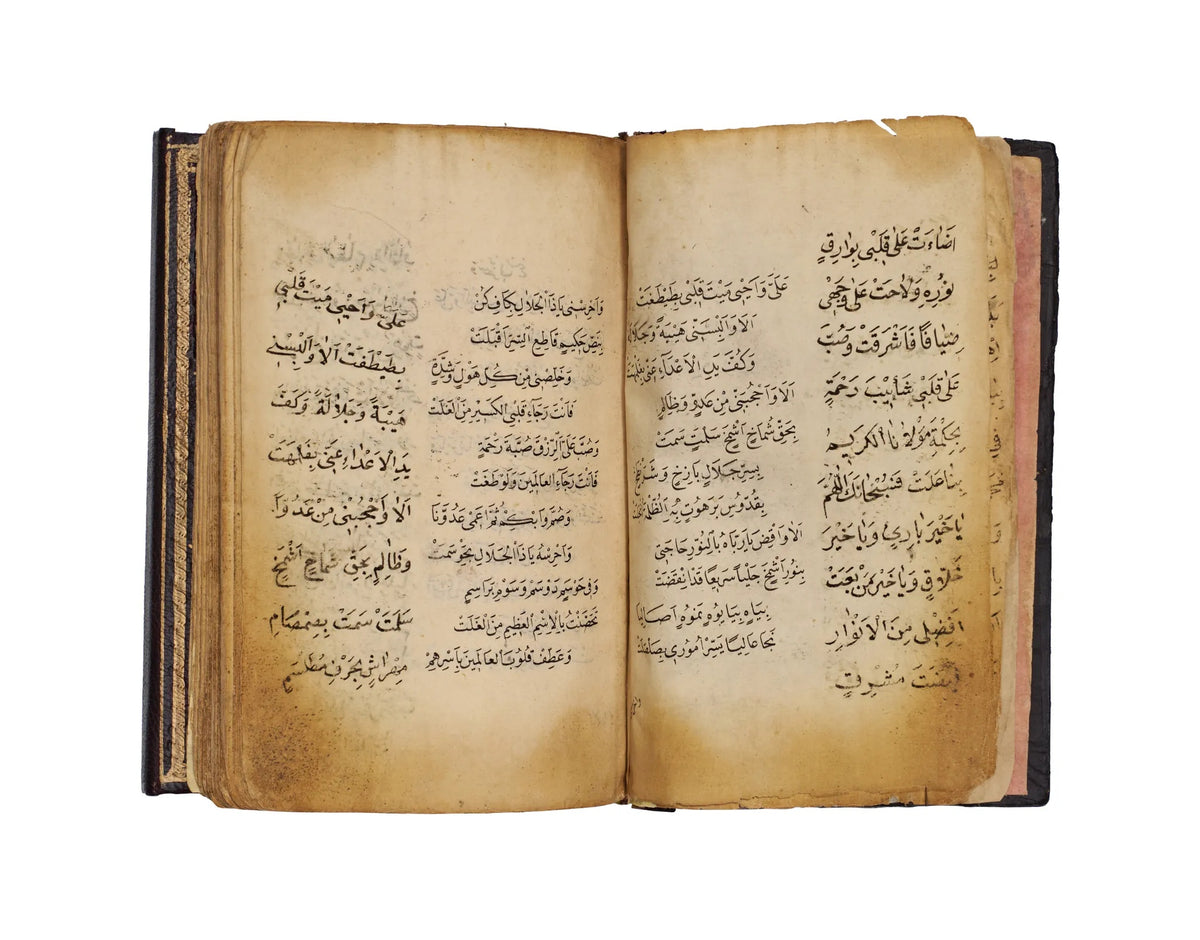
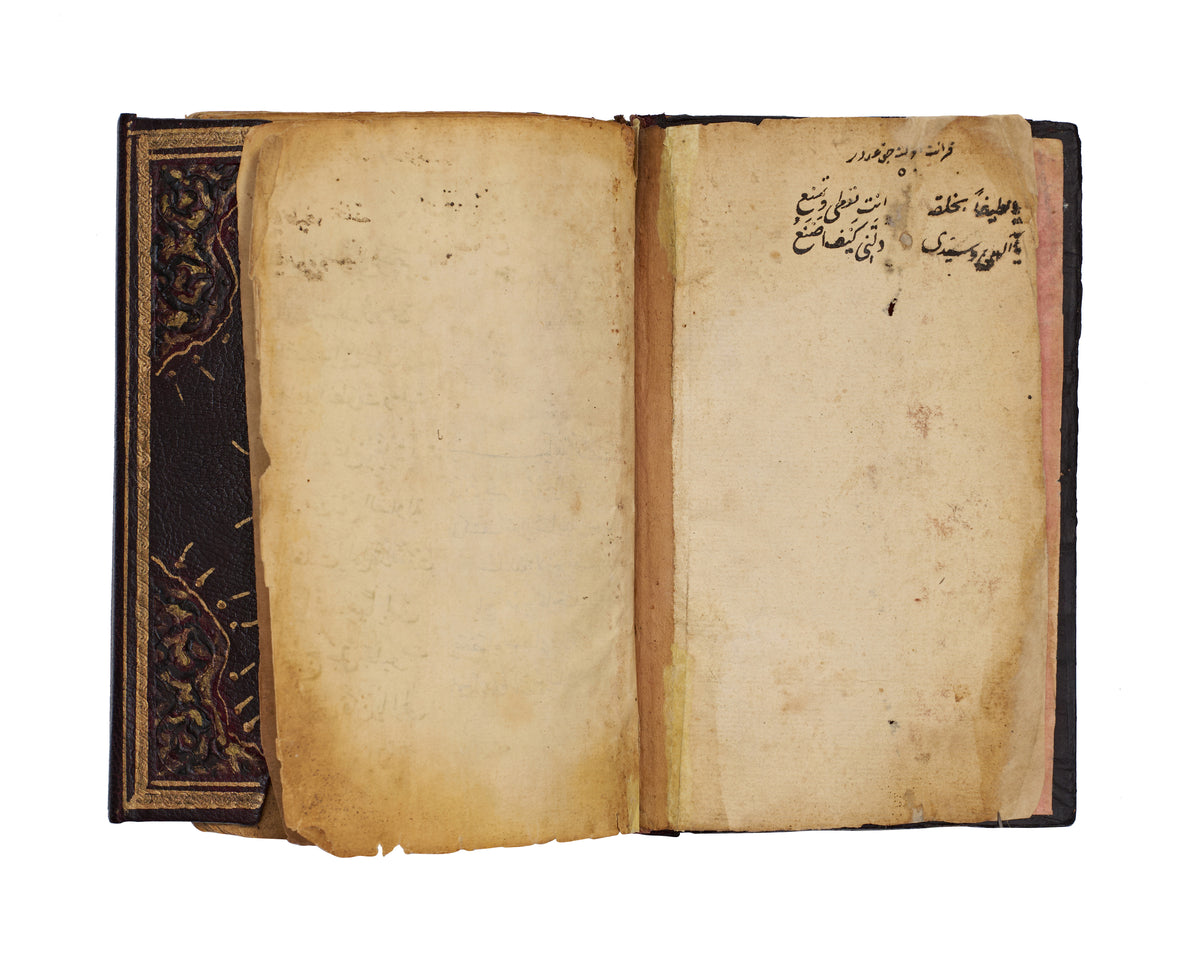
Late 18th century, circa 1785. Illuminated Arabic manuscript on paper, 17 x 12 cm, in a contemporary Ottoman binding.
A finely illuminated Ottoman copy of the Dala’il al-Khayrat, written by the calligrapher Halil Sidki, a pupil of the celebrated master Seyyid Suleyman, who served as a preacher at the Sokullu Mehmed Pasha Mosque during the early 19th century.
Halil Sidki belonged to the Ottoman tradition of the Aklam-ı Sitte, literally the “Six Scripts” or “Six Pens”. This term describes the six classical scripts of Islamic calligraphy - naskh, thuluth, muhaqqaq, rayhani, tawqi and riqa - which were refined into a coherent system and became fundamental to the teaching and practice of calligraphy throughout the Ottoman world. The newly identified calligrapher and his connection with Seyyid Suleyman place the manuscript within an established lineage of Ottoman calligraphic training.
The Dala’il al-Khayrat is among the most celebrated and widely circulated works of Islamic devotion. A collection of prayers and blessings upon the Prophet Muhammad, it was compiled in 15th-century Morocco by Muhammad ibn Sulayman al-Jazuli, who died in 1465. Usually divided into sections for daily or weekly recitation, the work achieved extraordinary popularity across the Islamic world, from North Africa to the Ottoman Empire and the eastern Islamic lands.
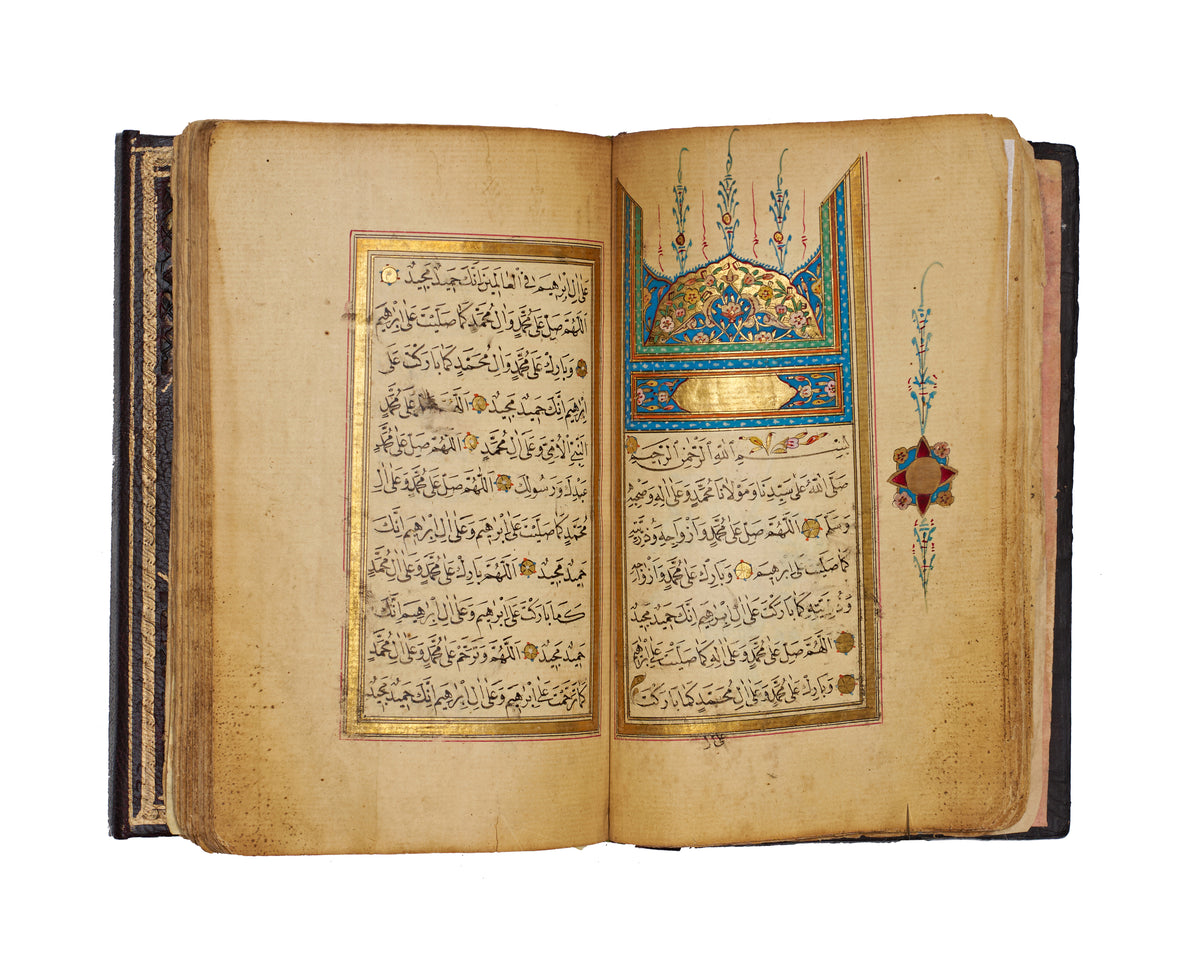
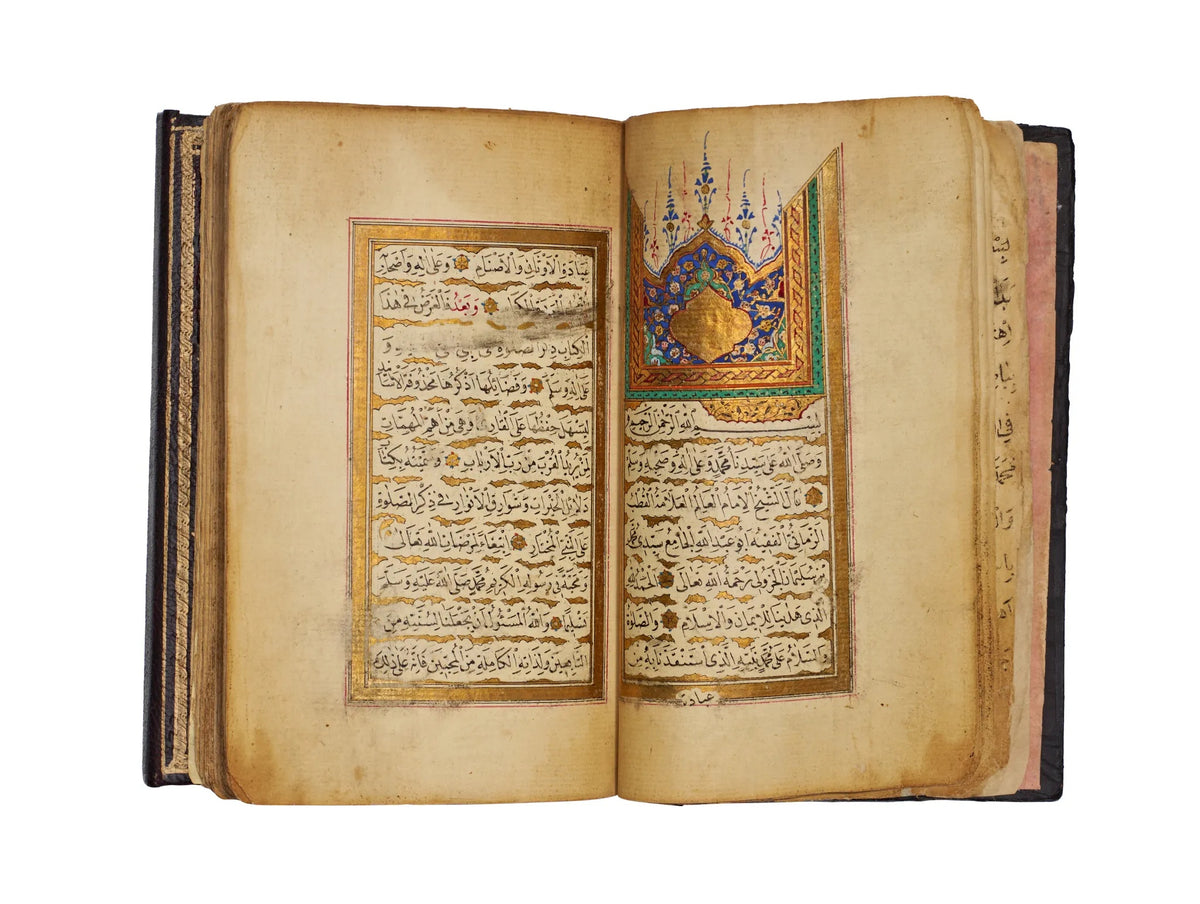
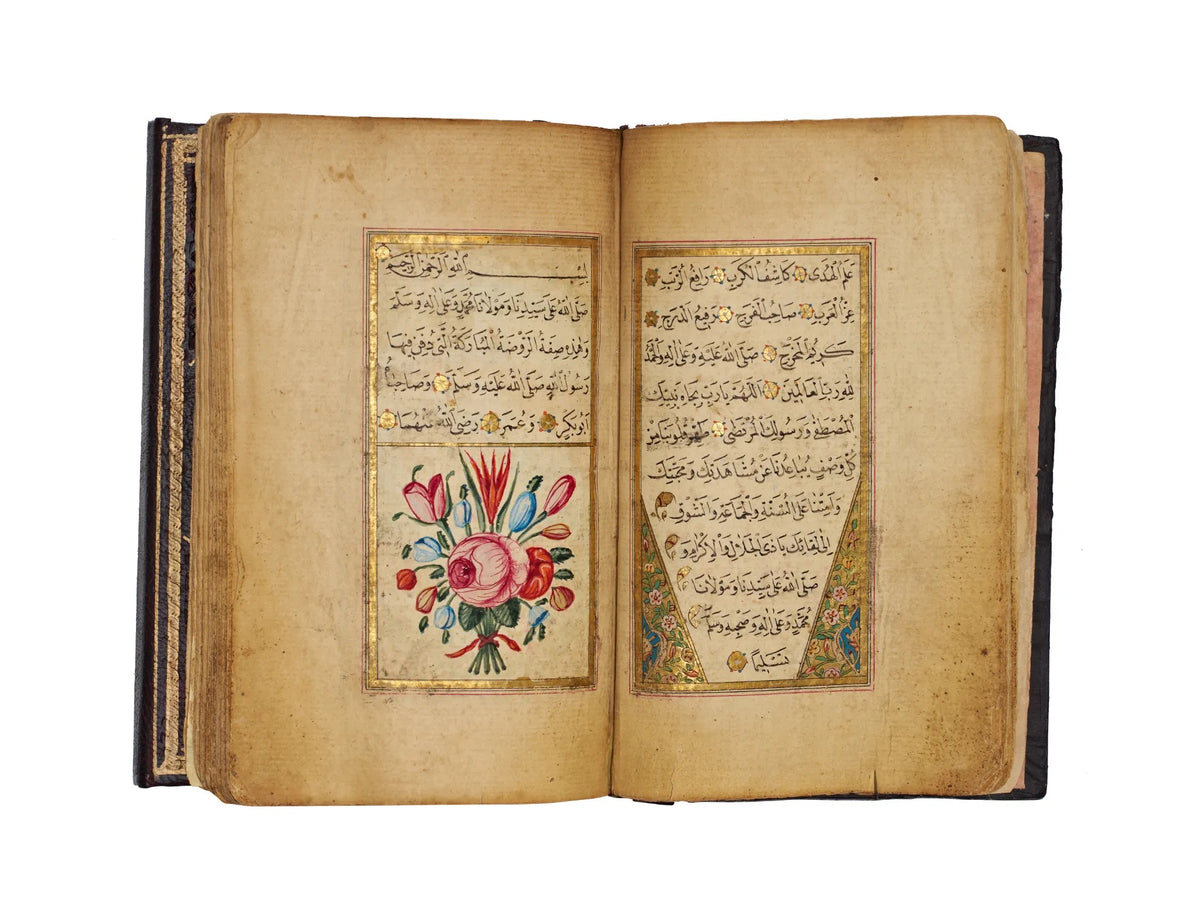
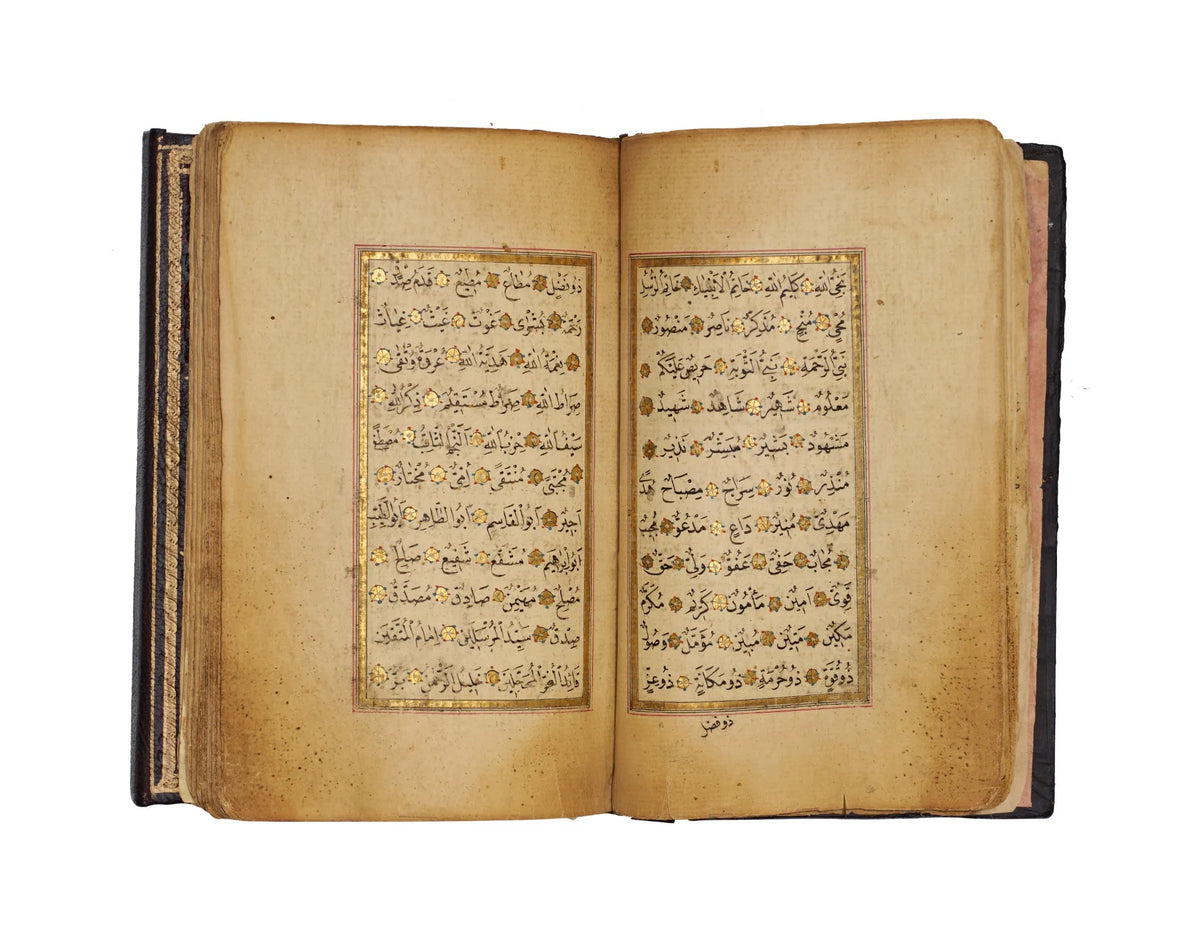
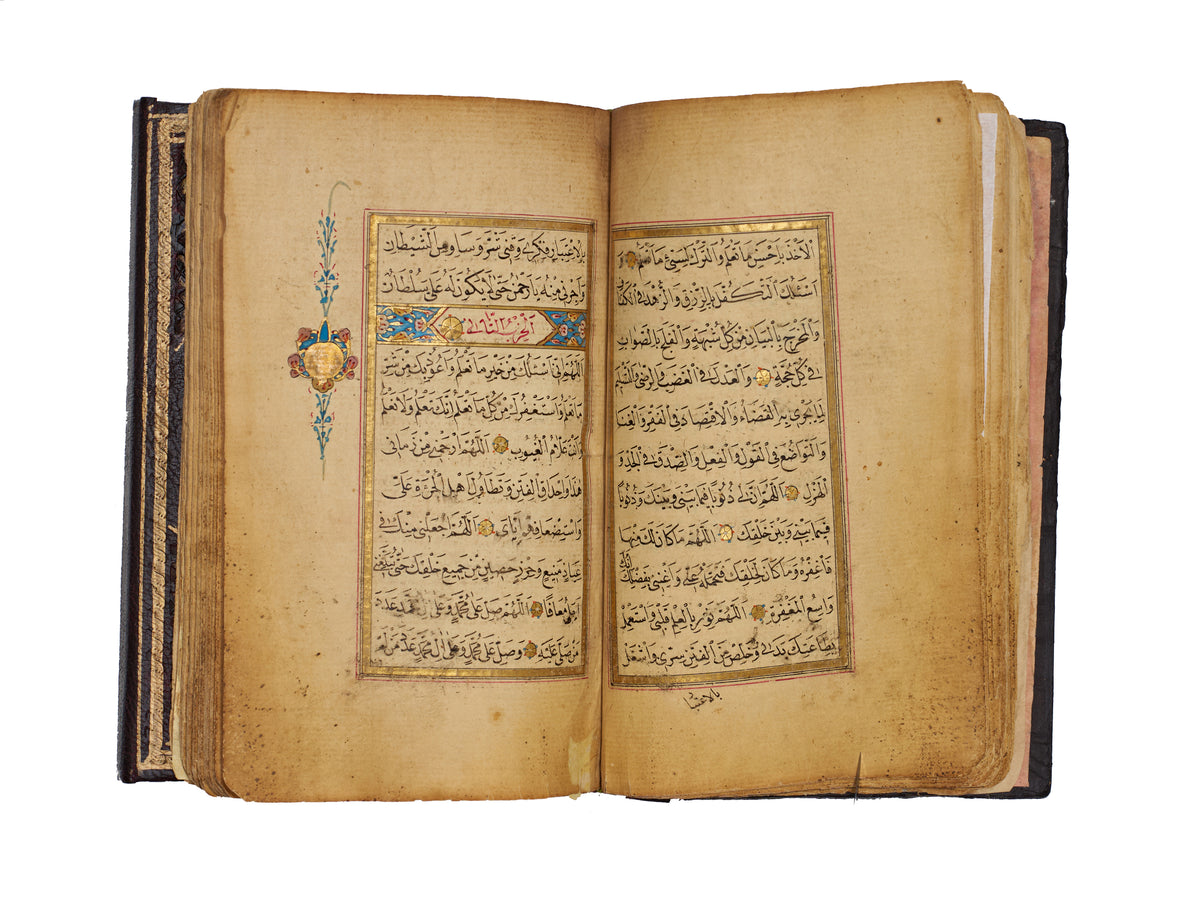
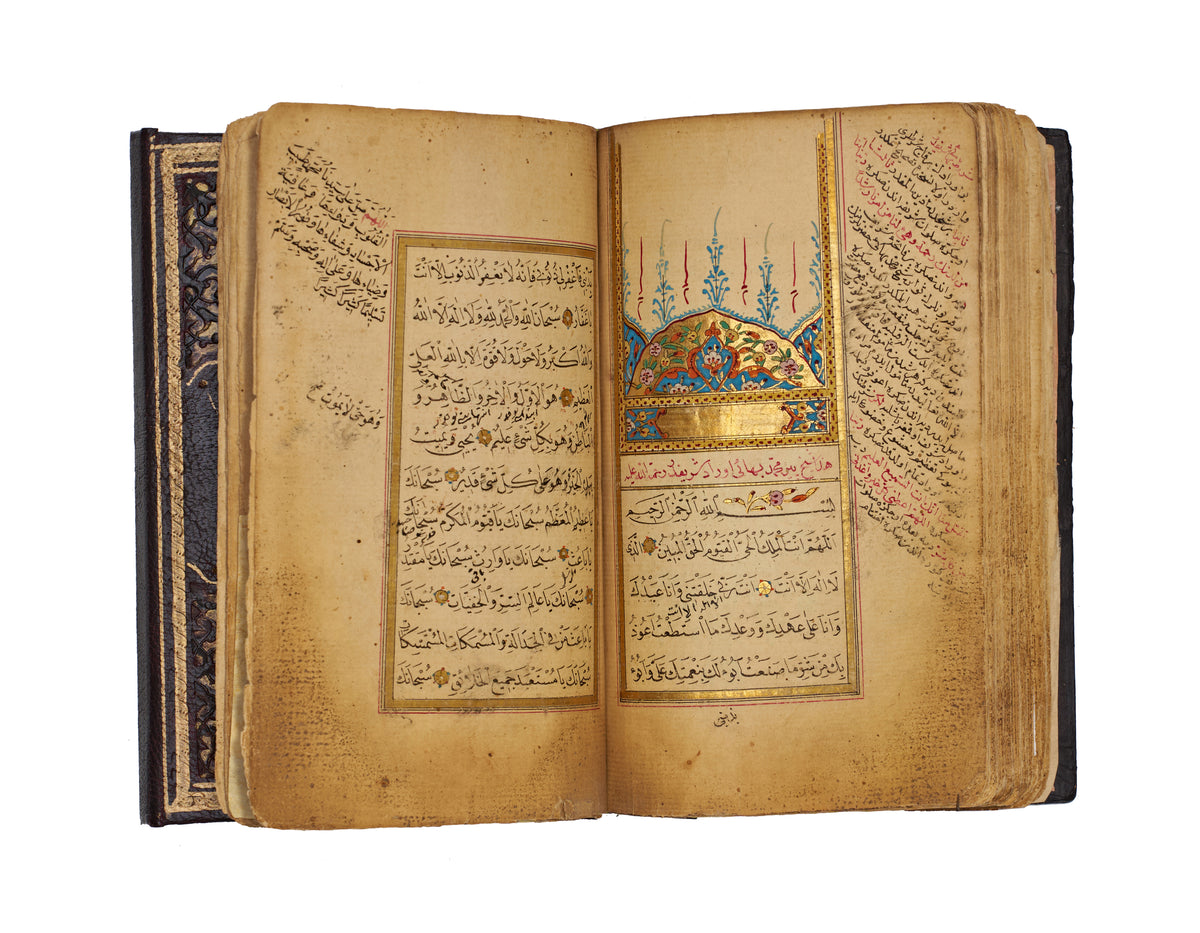
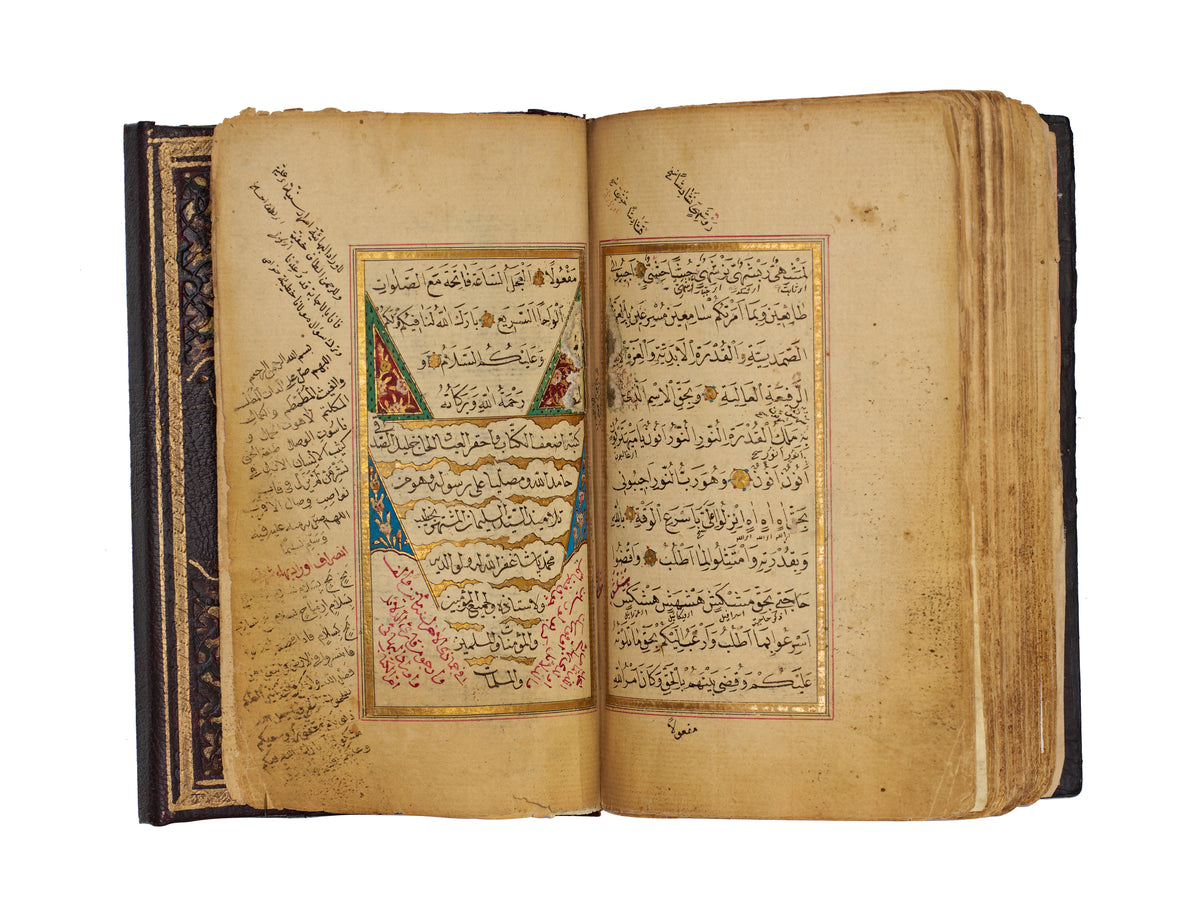
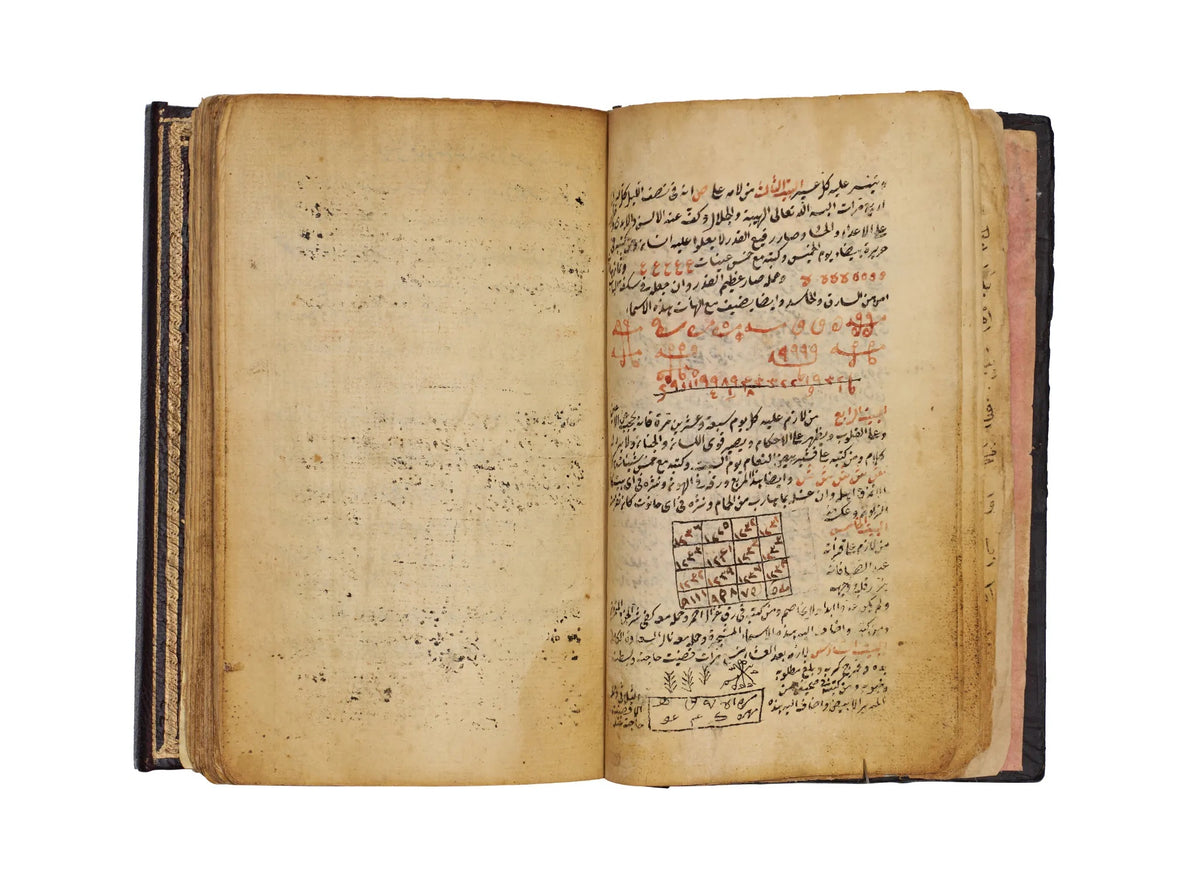
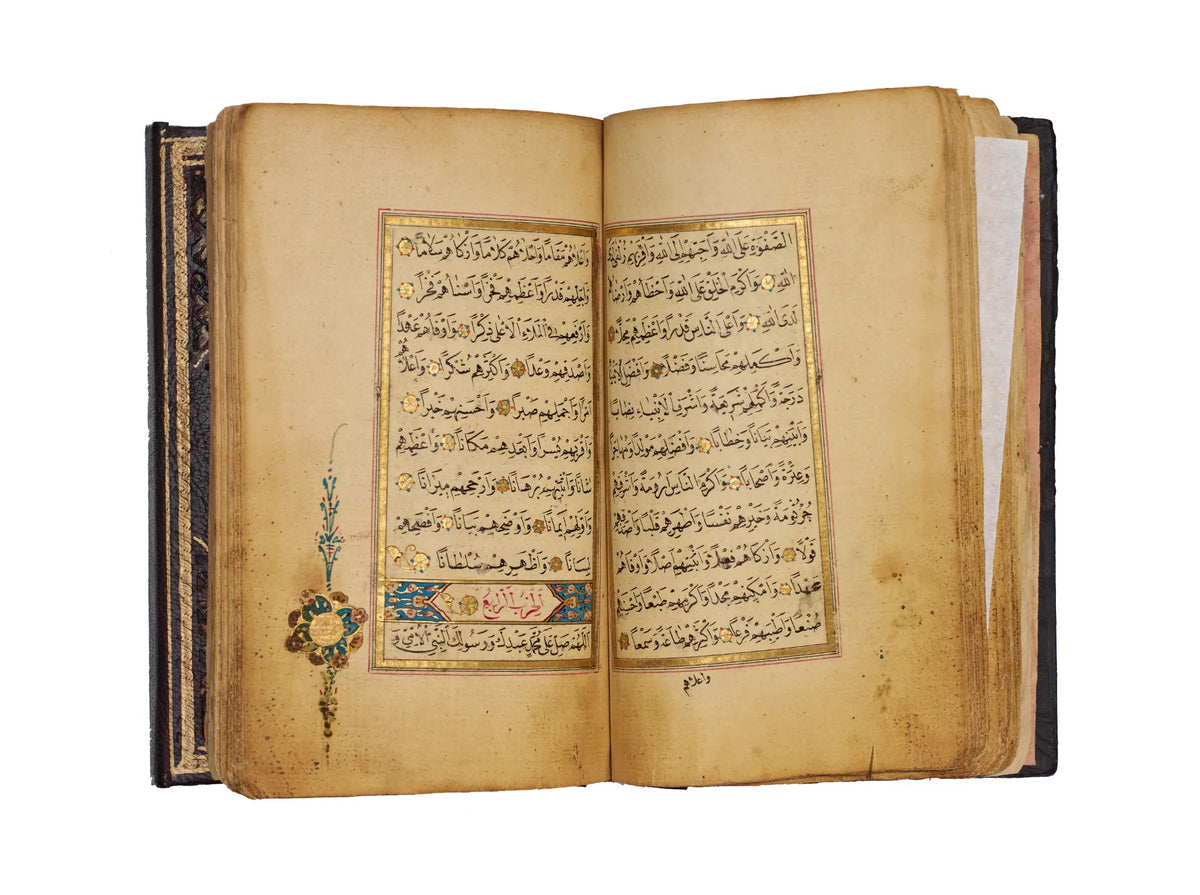
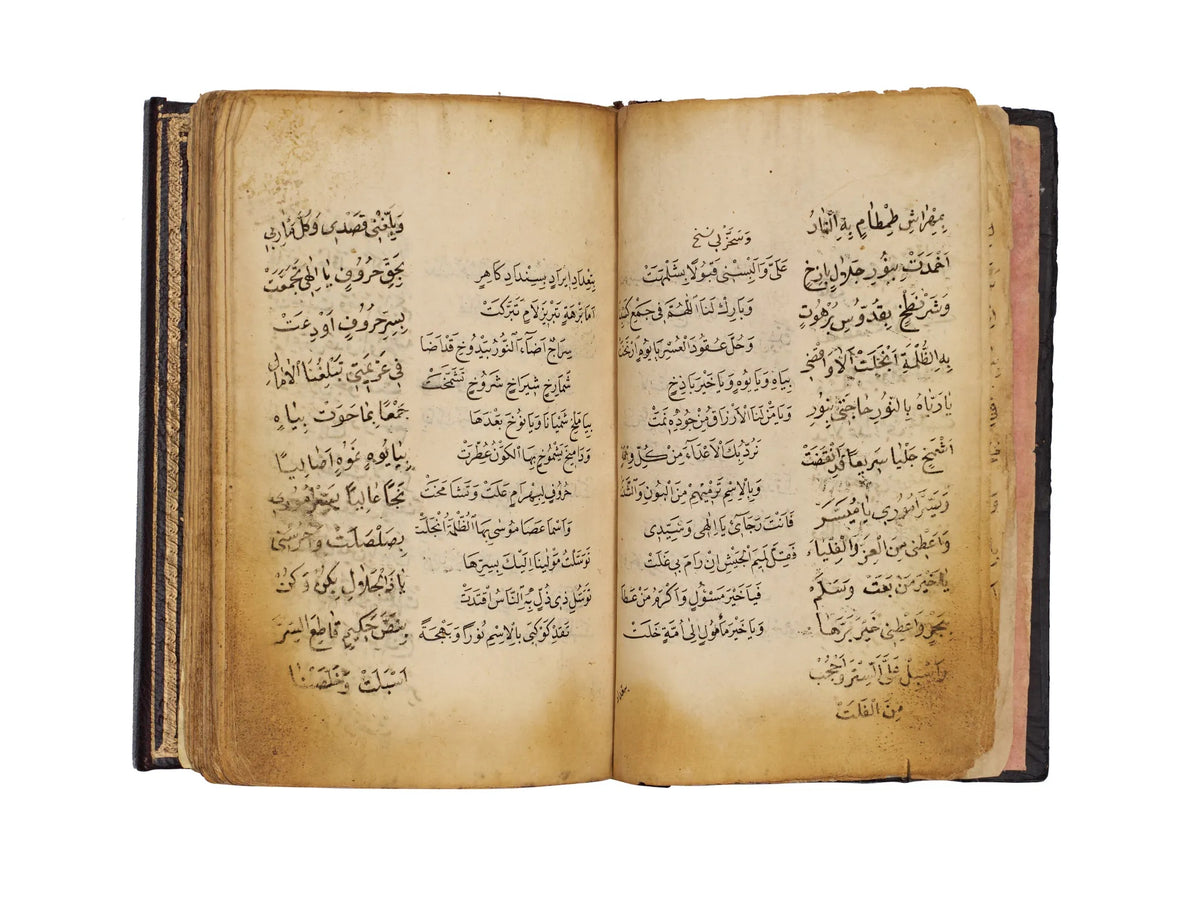
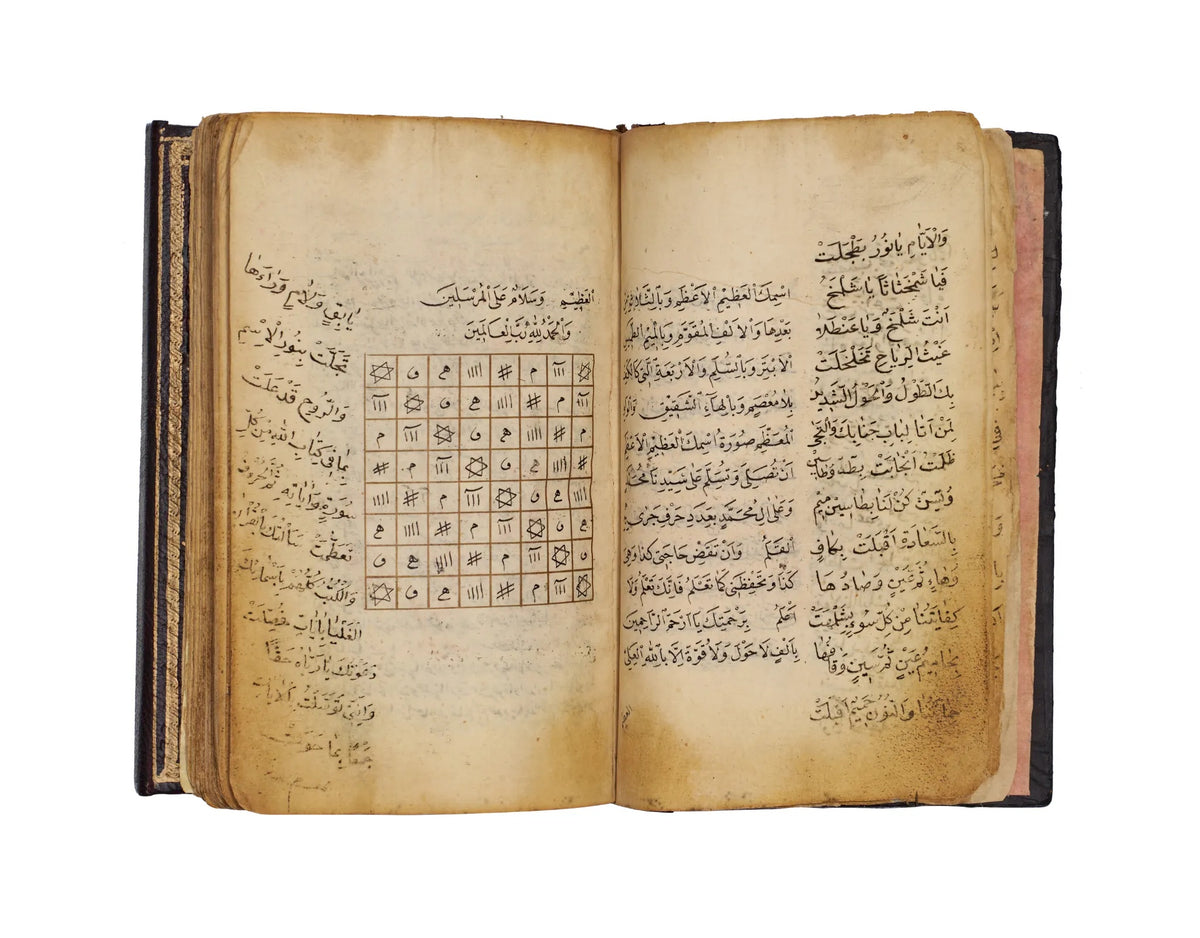
This example was produced as a portable personal prayer book. The text is written in a controlled and accomplished Arabic hand, framed throughout by ruled borders in gold and colour. The manuscript is richly ornamented with illuminated headpieces, floral bouquet pages and sectional devices that articulate the rhythm and progression of the devotional text.
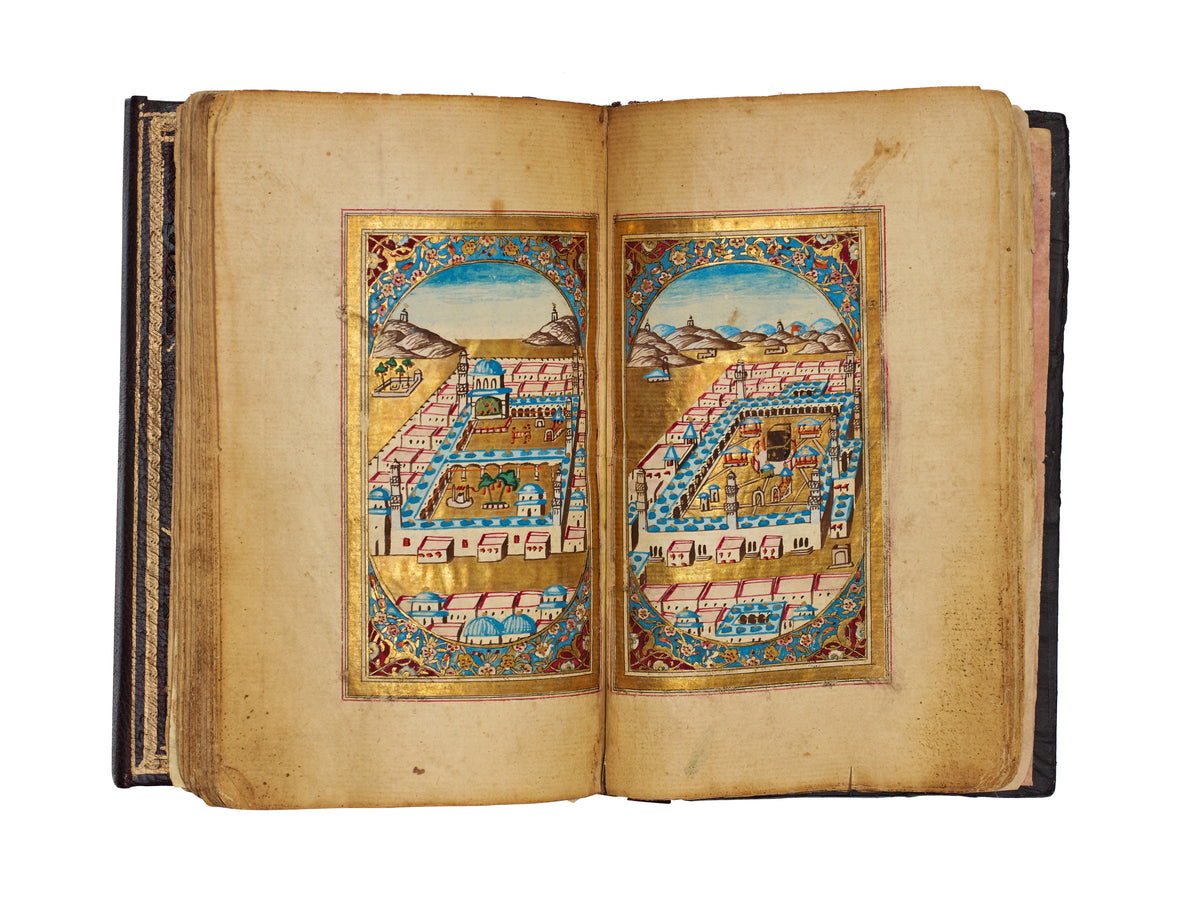
Particularly notable are the double-page representations of Mecca and Medina. The Ka‘ba is shown at the centre of the sanctuary within the Masjid al-Haram, rendered in a stylised bird’s-eye view and surrounded by arcades and minarets. It is paired with a corresponding representation of the Prophet’s Mosque at Medina, a characteristic and highly desirable feature of finely produced copies of the Dala’il al-Khayrat.
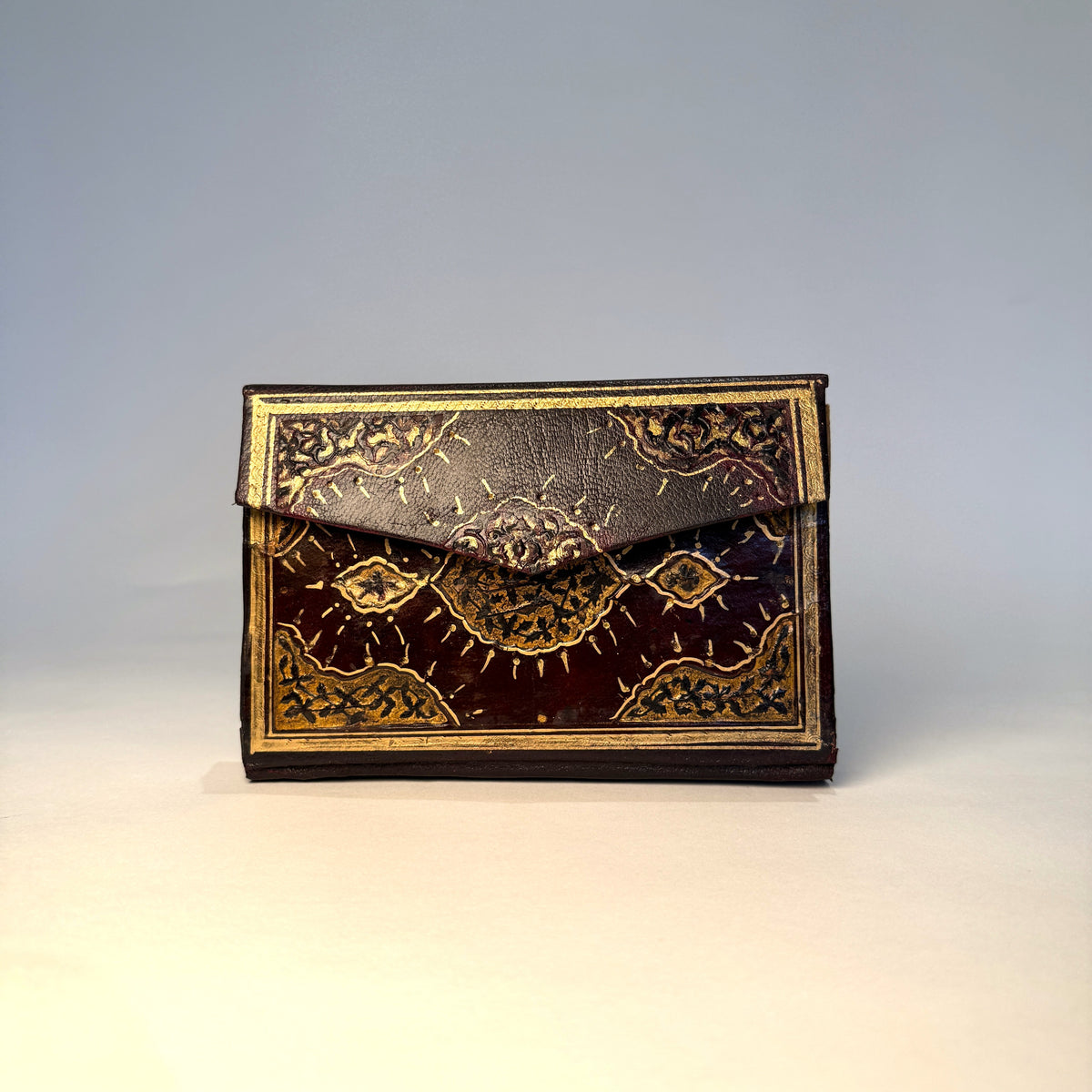
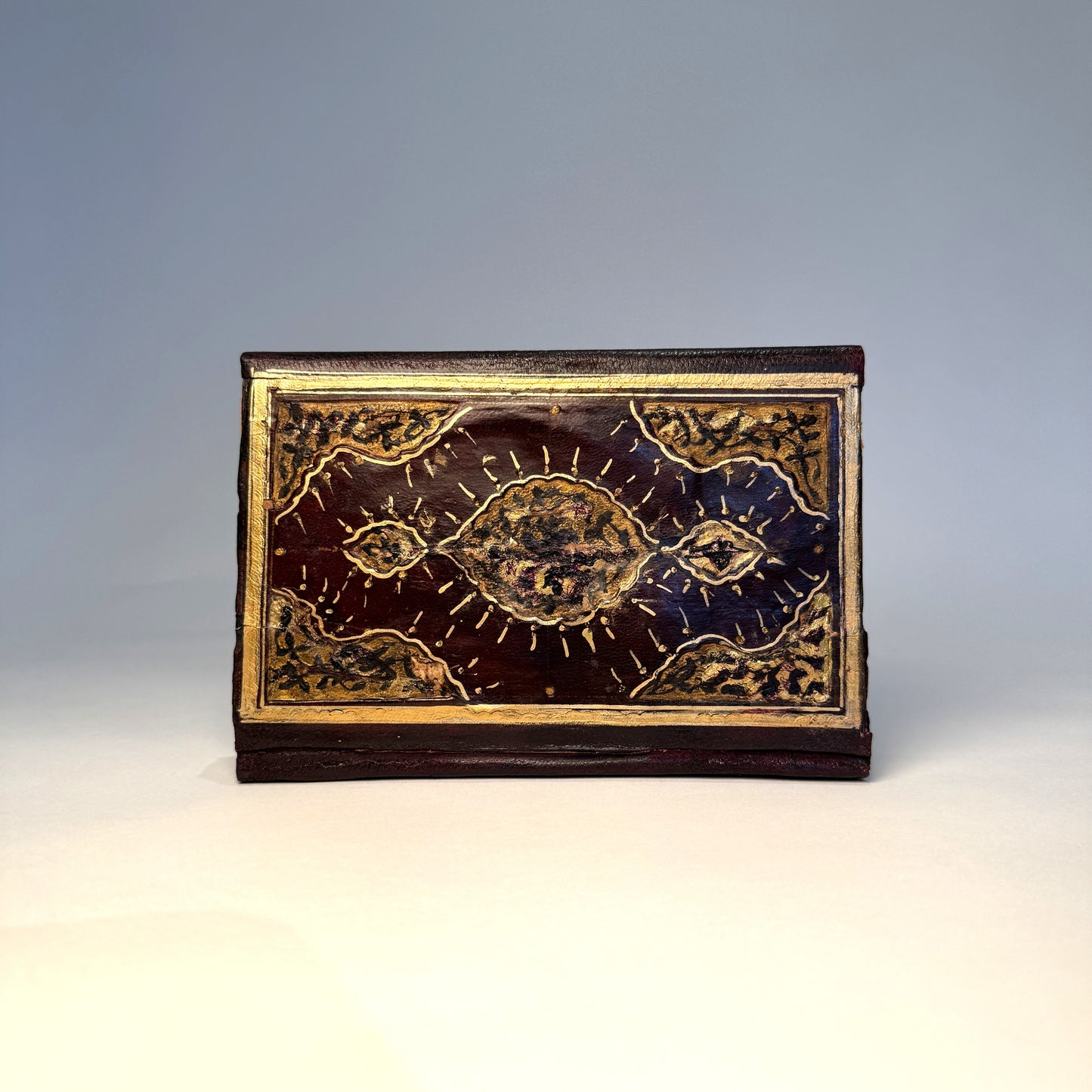
The contemporary binding, decorated with a central lobed medallion and matching corner pieces, follows established Ottoman decorative practice. The painted floral bouquets act as elegant visual intervals within the devotional sequence, combining the manuscript’s religious purpose with the refined calligraphic and ornamental traditions of late 18th-century Ottoman book production.