NICHOLSON, C. [Colin]. Manuscript Voyage Diary, 1880–1885.
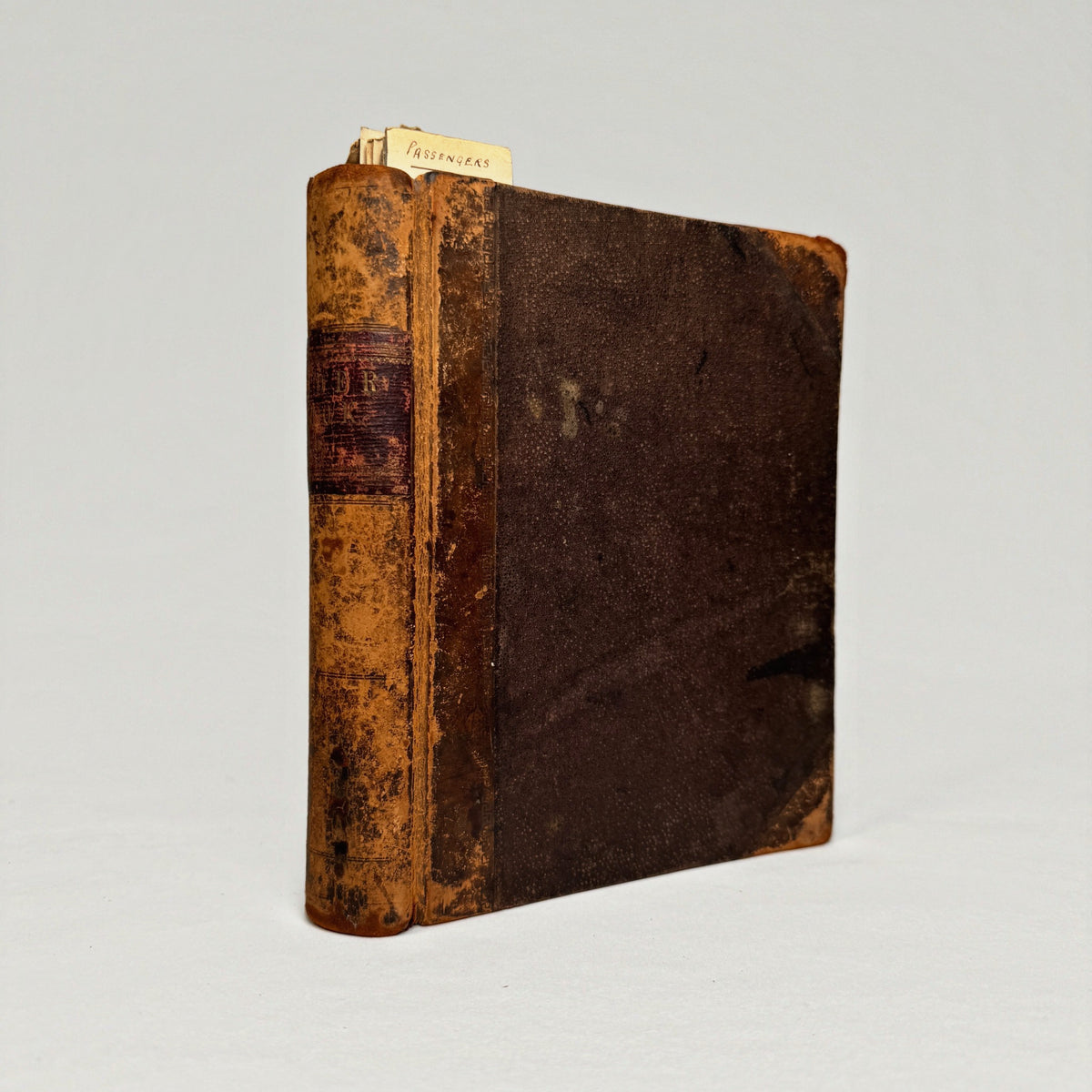
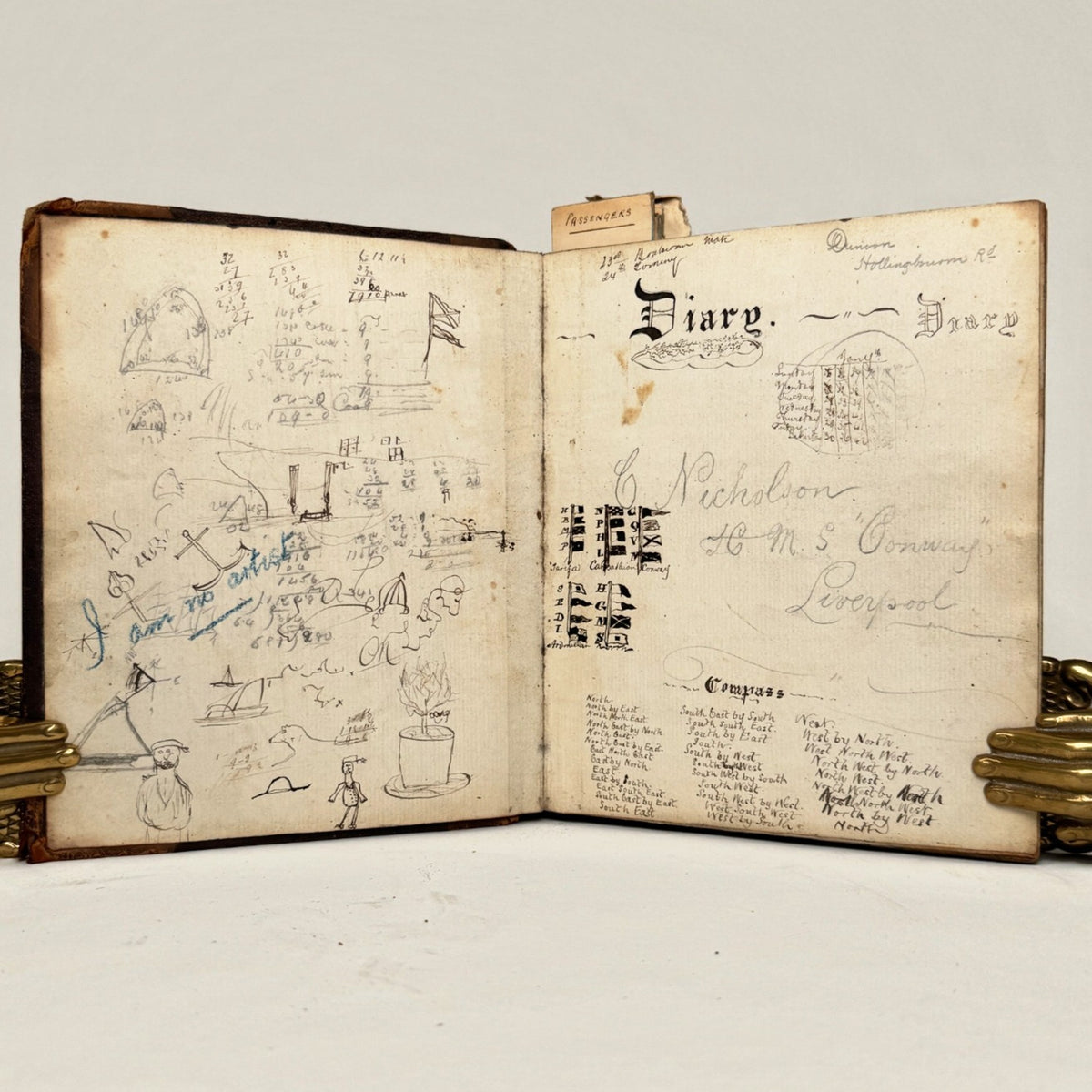
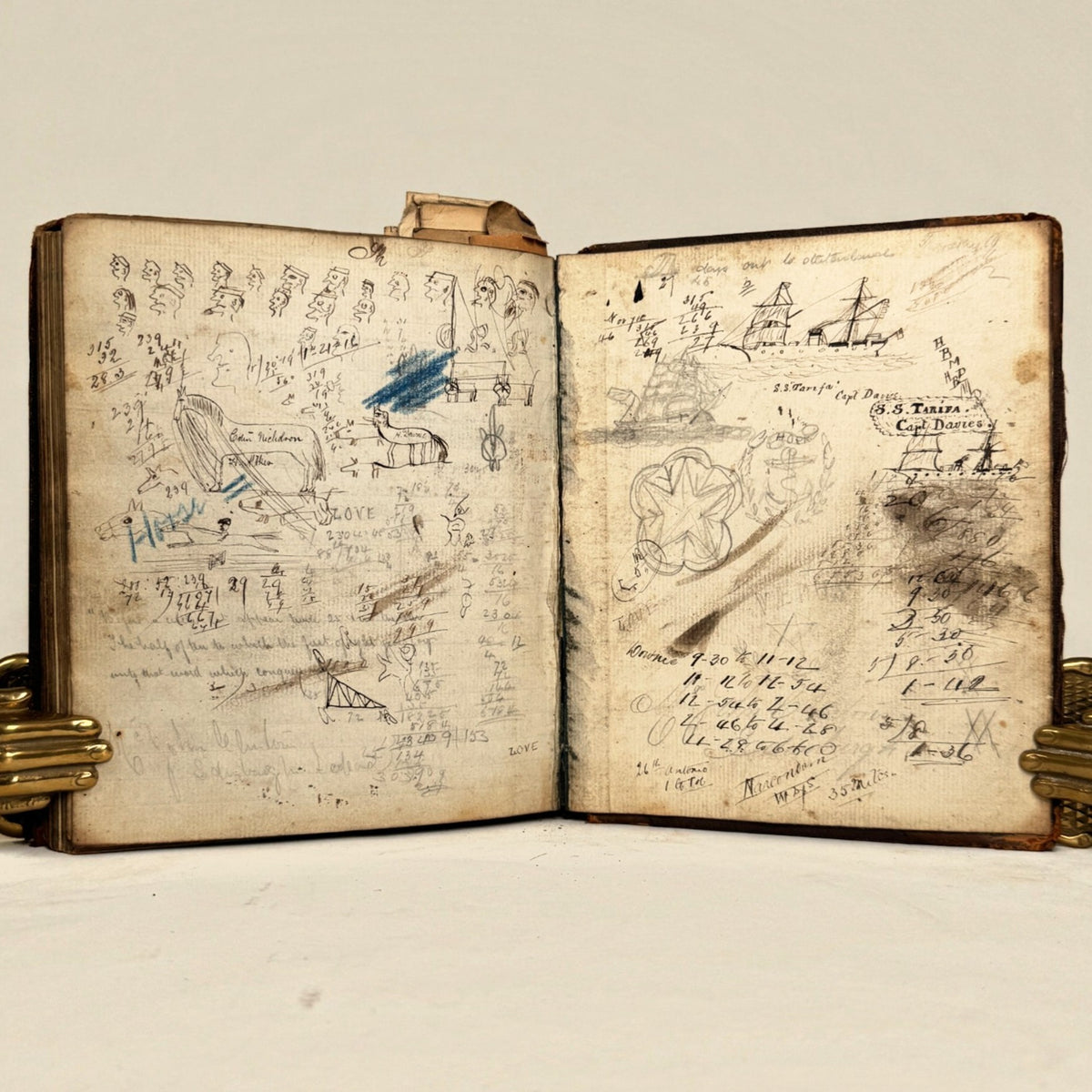
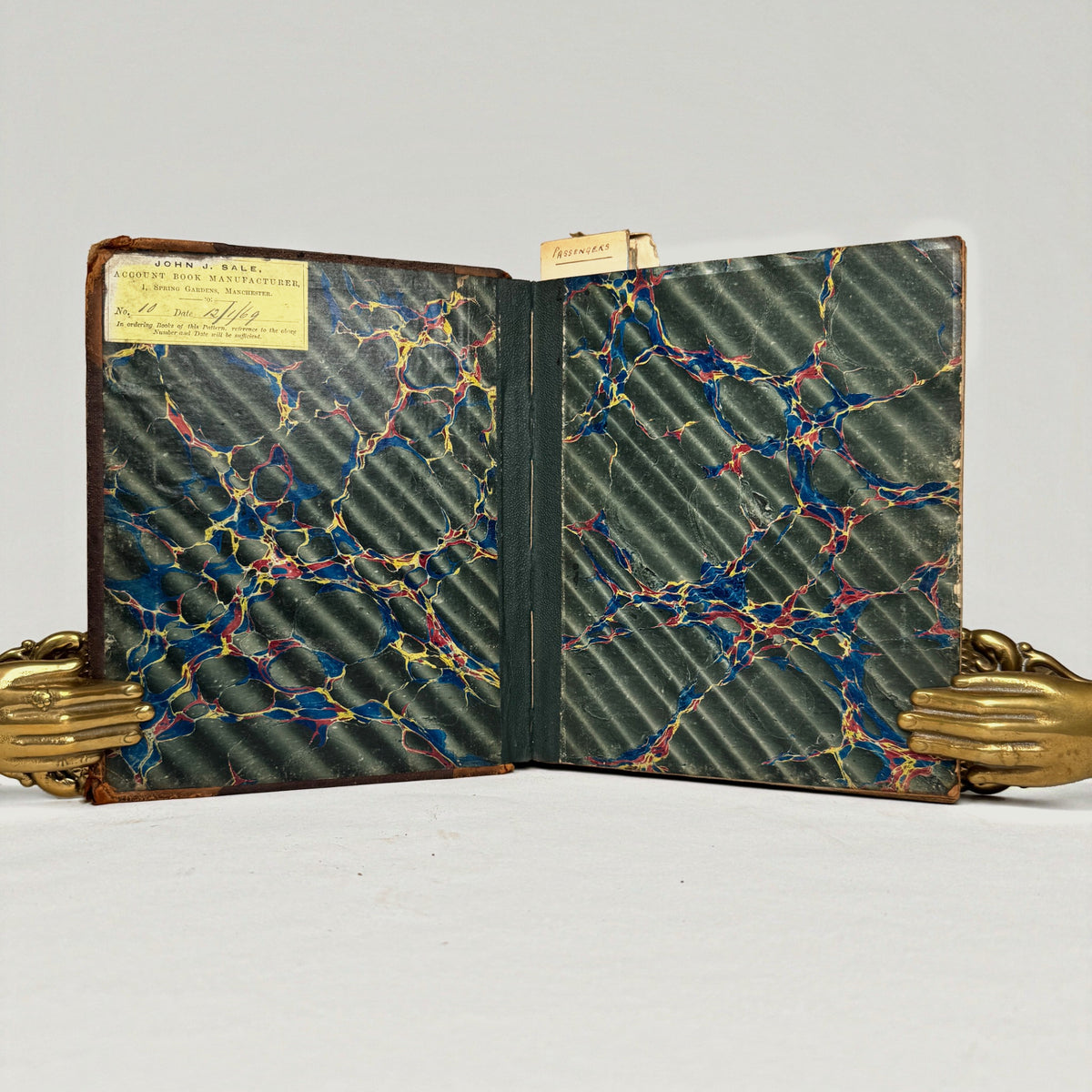
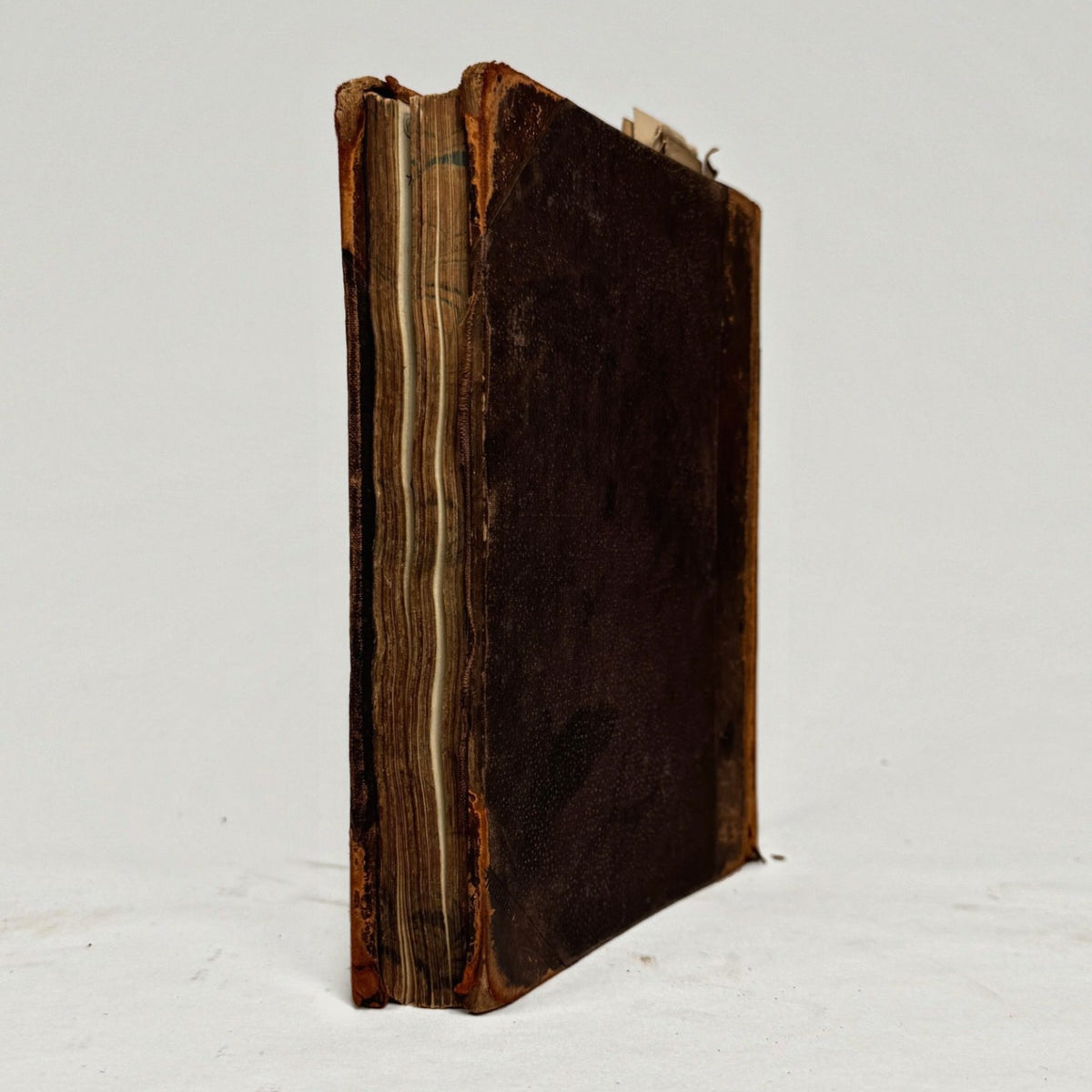
Unpublished. Original handwritten manuscript in one volume, with ship sketches, signal flags, passenger lists and manuscript inserts. Contemporary half leather over brown cloth boards, with marbled endpapers.
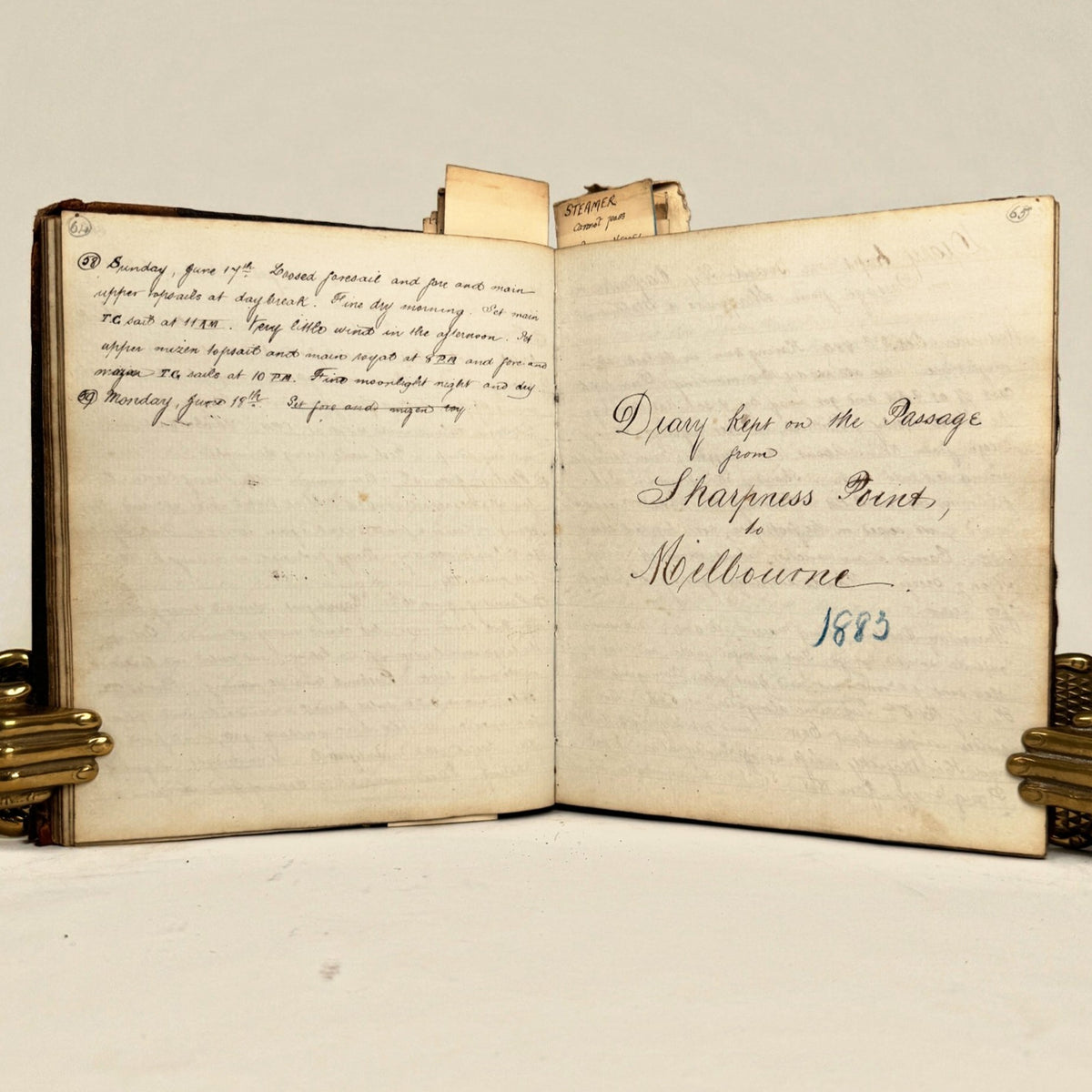
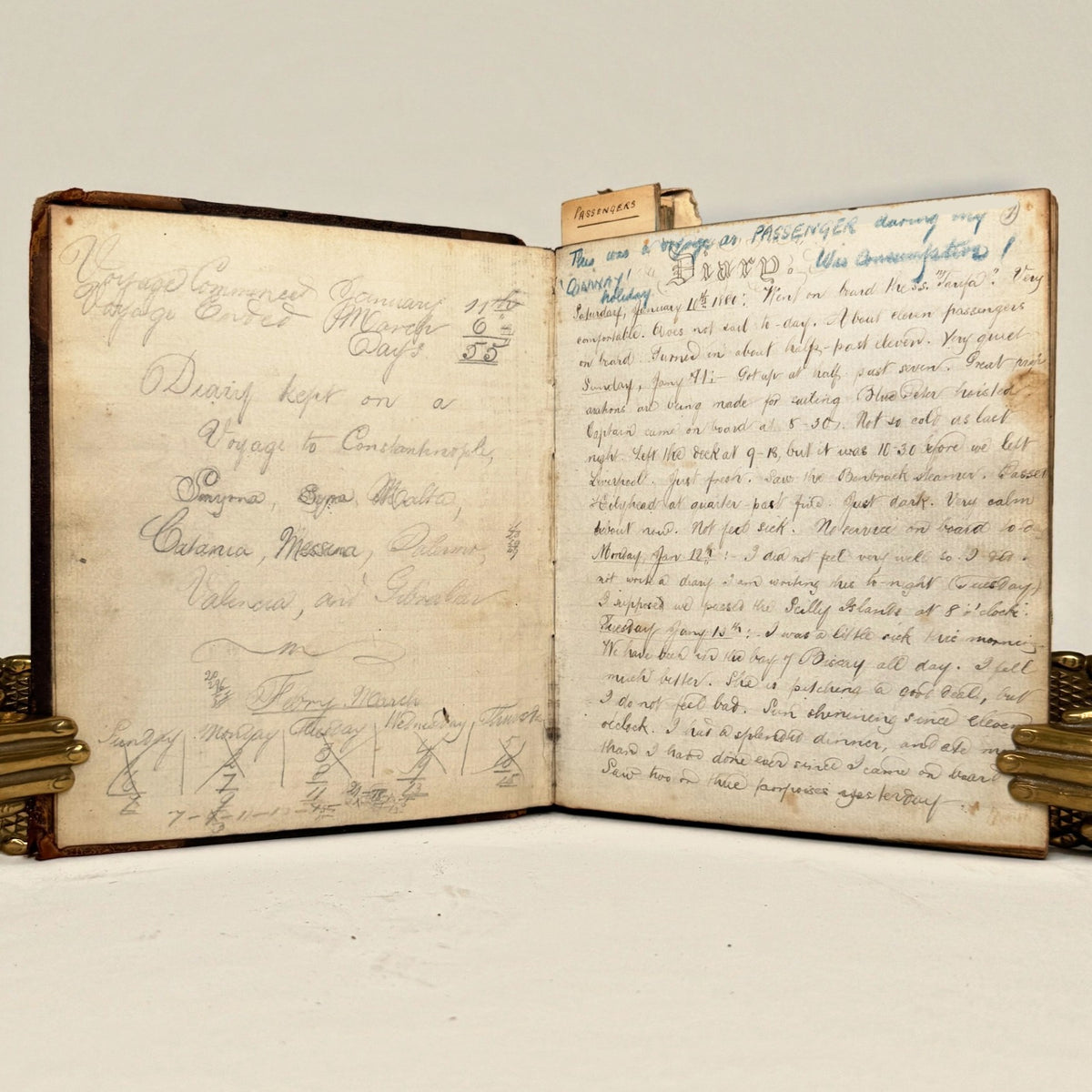
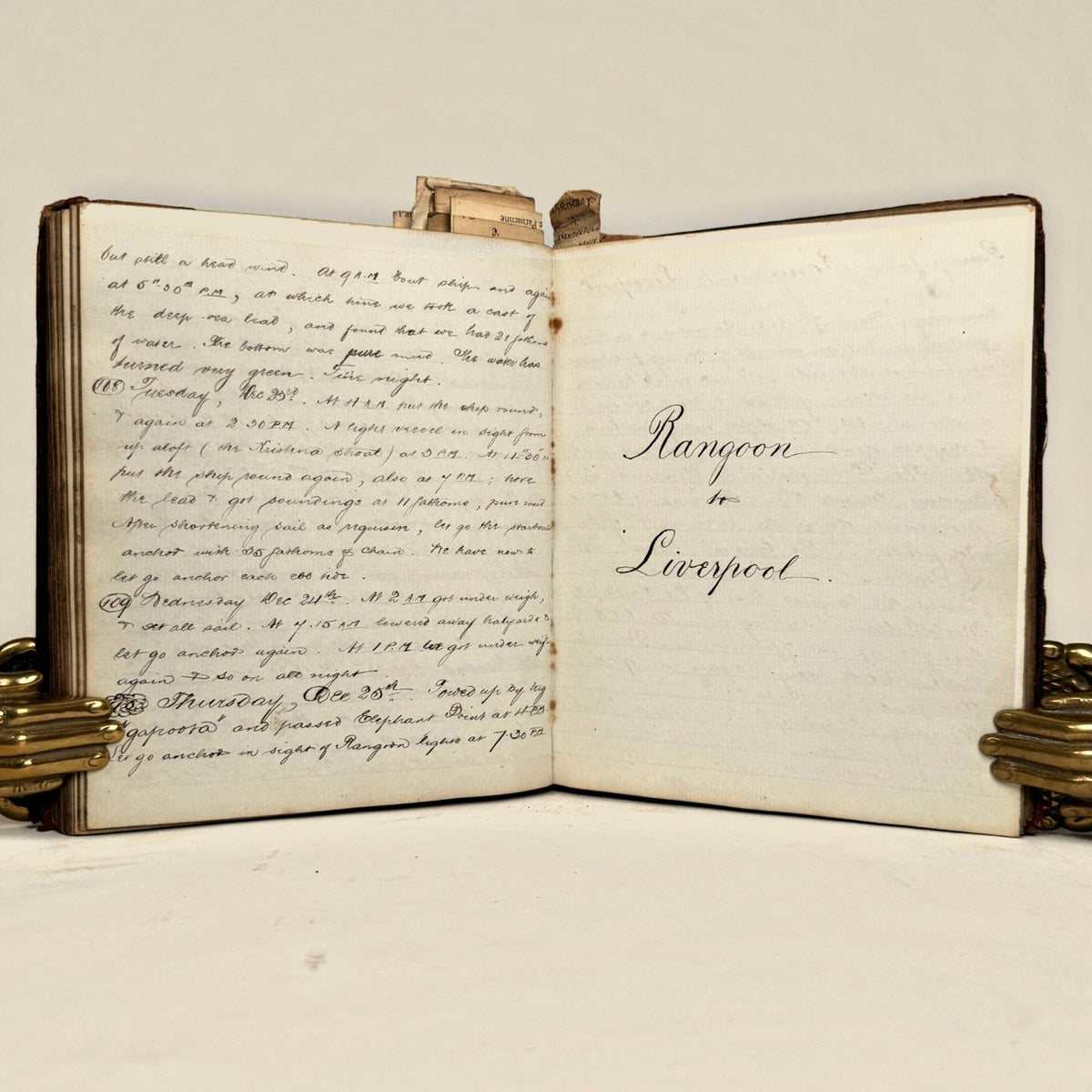
An original handwritten diary of voyages to the Mediterranean, Australia, New Zealand and Rangoon, spanning 1880–1885. Kept by C. Nicholson, identified as Colin Nicholson (1866–1954), it records his experiences between the ages of thirteen and nineteen. A cadet aboard HMS Conway, Nicholson later became a master mariner and Orient Line captain. The diary begins with a passenger voyage aboard Tarifa during his Conway holiday, followed by apprentice voyages, including passages aboard Carpathian.
The most dramatic episode unfolds on 11 April 1885, when three exhausted pearl fishermen were rescued in the Indian Ocean. They described escaping ill-treatment and unpaid wages at North West Cape, Australia, then spending forty days in a small boat. Desperate shortages had reduced them to chewing boot leather; one could no longer stand. Nicholson records their recovery and receiving three pearls from a survivor.
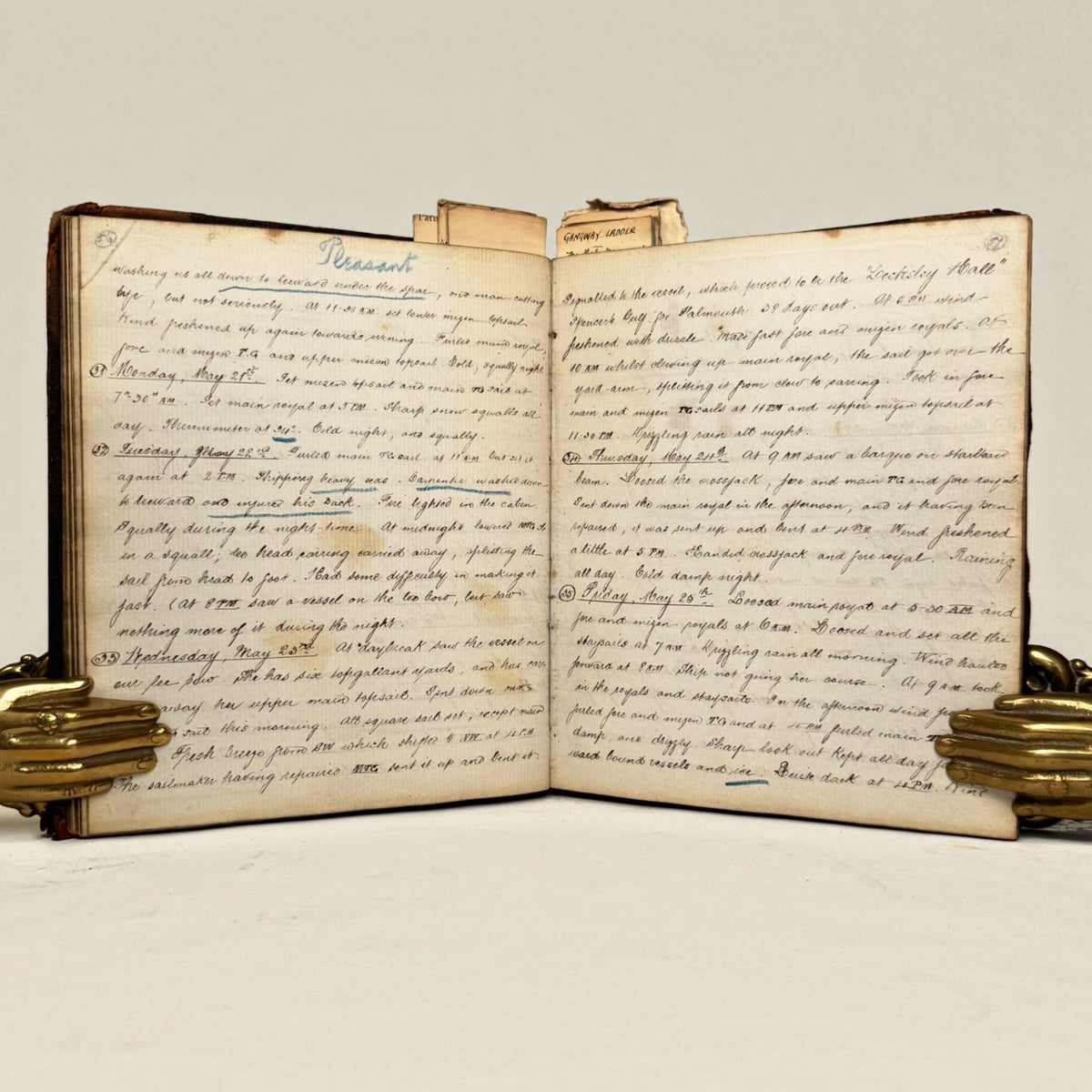
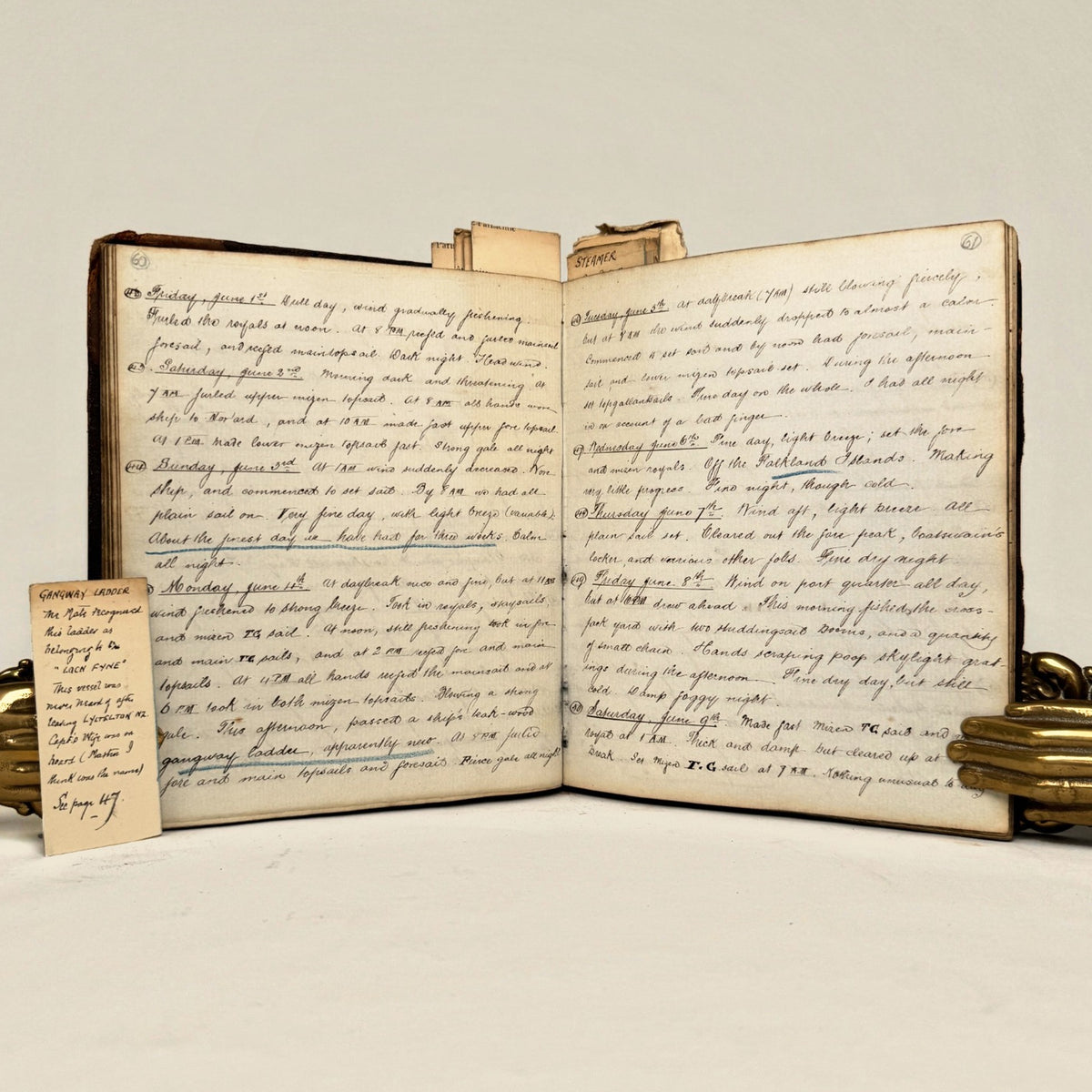
Another passage concerns the vanished Loch Fyne. Having encountered her at Lyttelton in March 1883, Nicholson records passing a teak gangway ladder at sea on 4 June. An undated inserted note states that the mate recognised it as belonging to Loch Fyne, lost with all thirty-five aboard: a tantalising possible connection, whose identification remains unconfirmed.
In October 1882, Nicholson describes a “splendid comet”, with passengers rising at four in the morning to watch it. These observations are consistent with the Great September Comet of 1882.
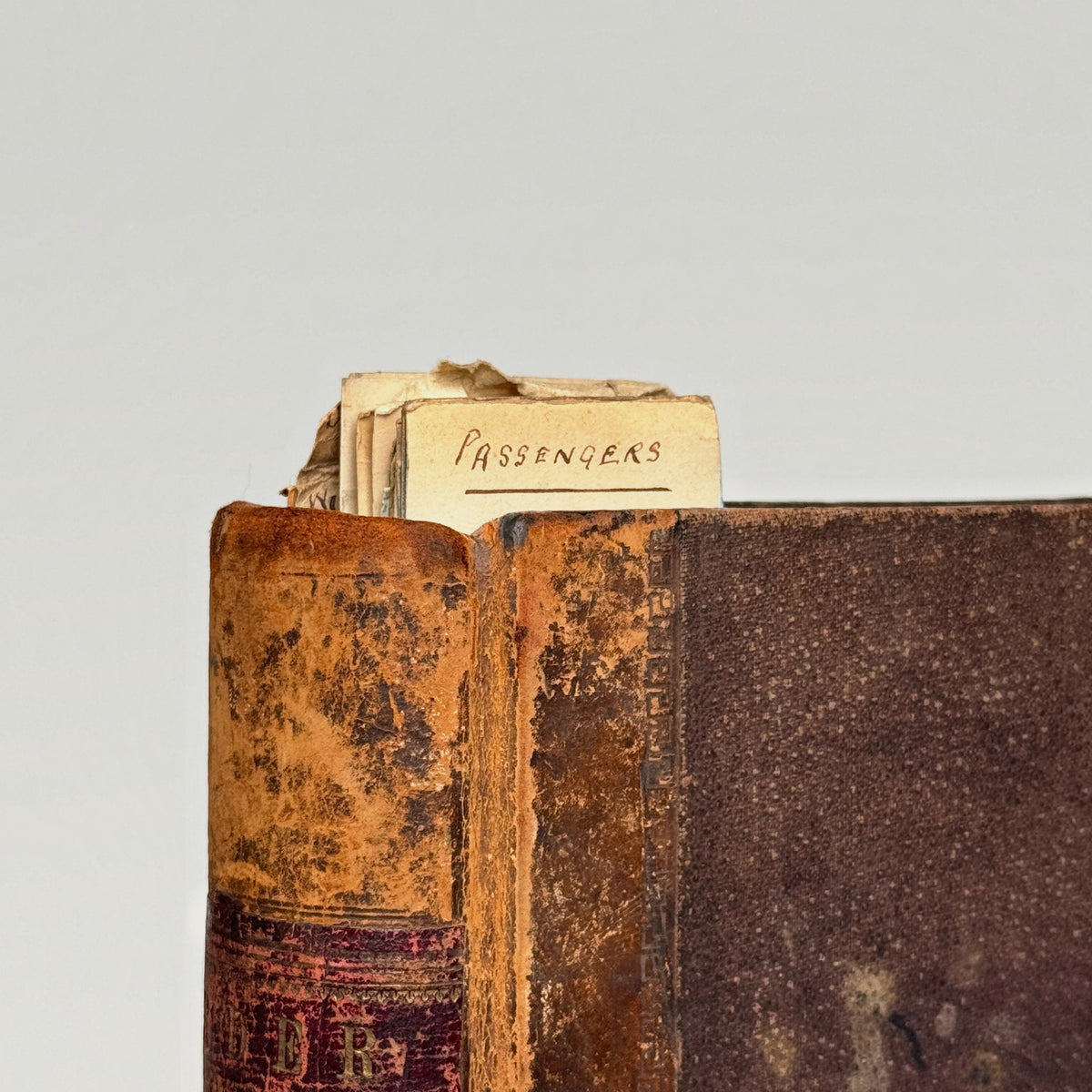
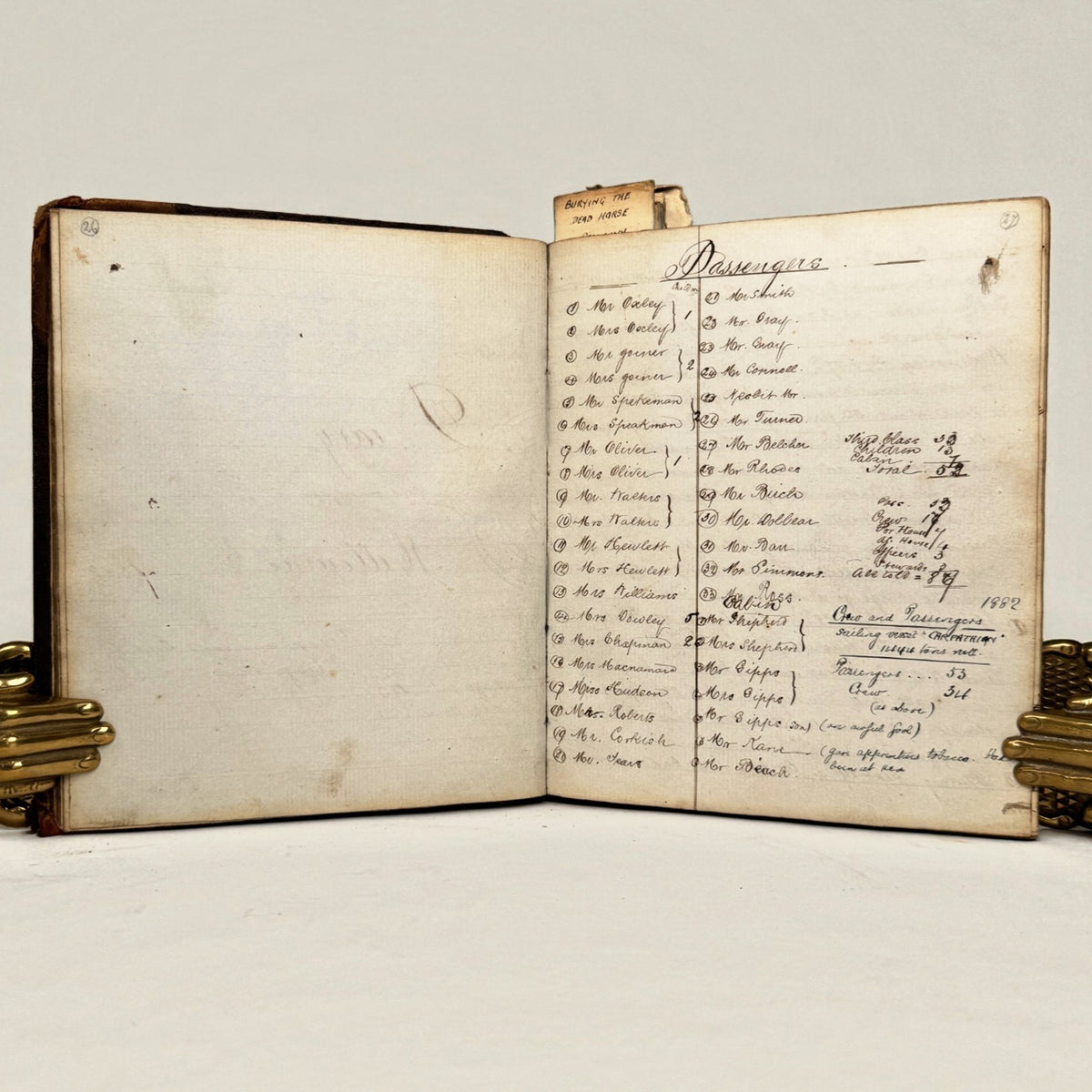
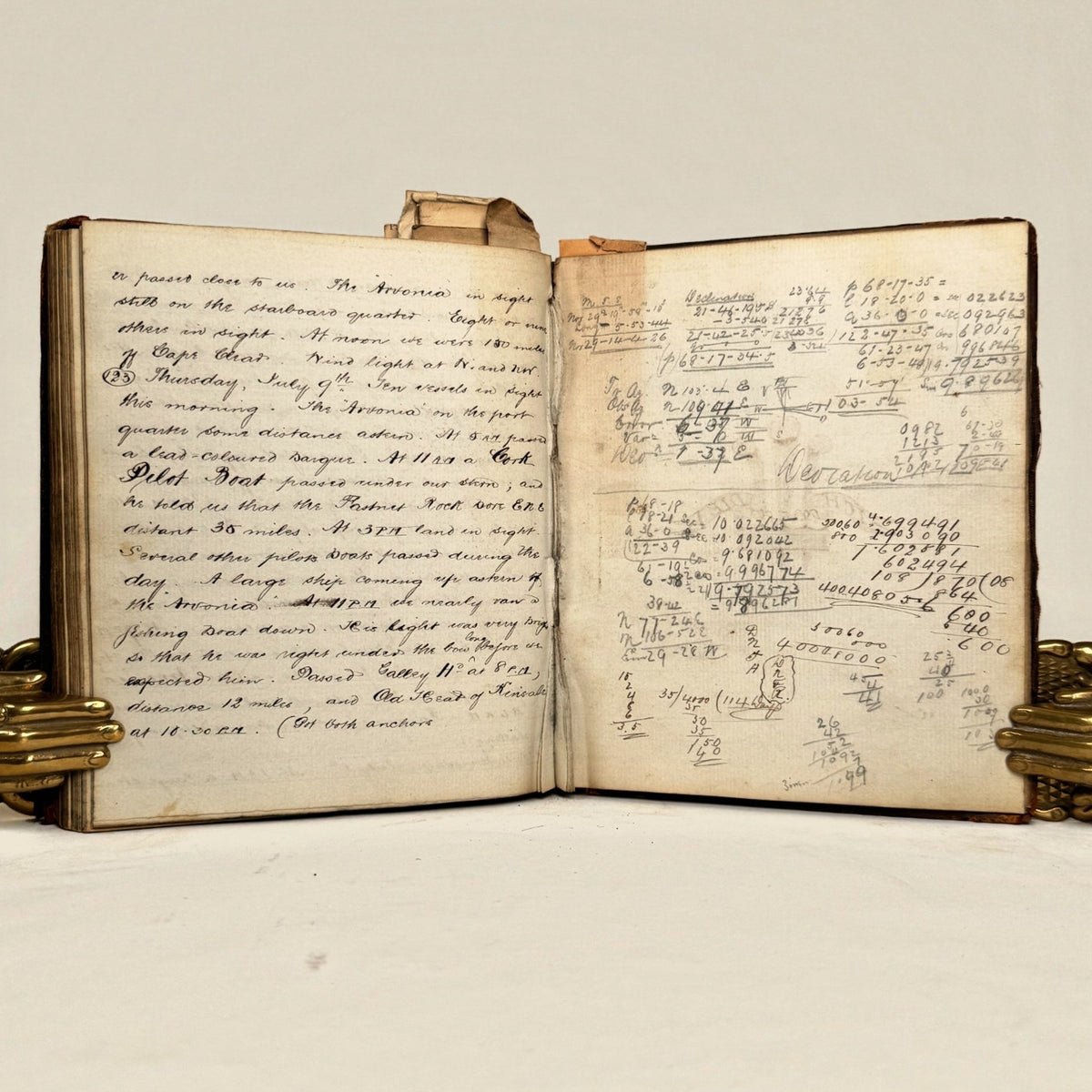
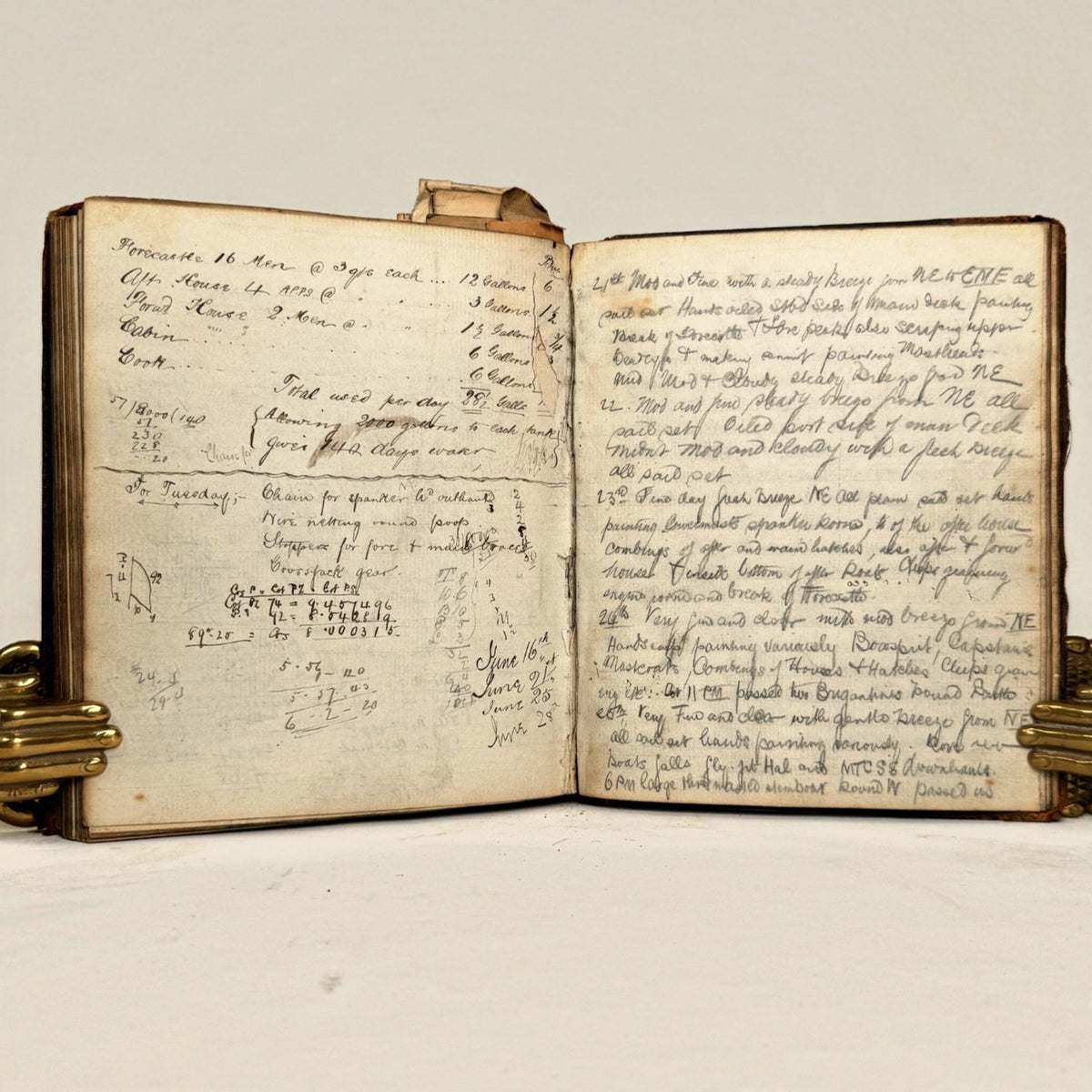
Ship sketches, signal flags, passenger lists, navigation calculations and manuscript slips accompany the entries, alongside records of daily work. The contemporary half-leather binding, brown cloth boards and marbled endpapers retain considerable character, with rubbed leather, worn corners, gently toned pages and occasional spotting and marks. The Manchester stationer’s label of John J. Sale survives.
From the library of Martin Nicholson CMG (1937–2025), the British diplomat and specialist in Soviet affairs who advised Margaret Thatcher on the Soviet Union.